Log in



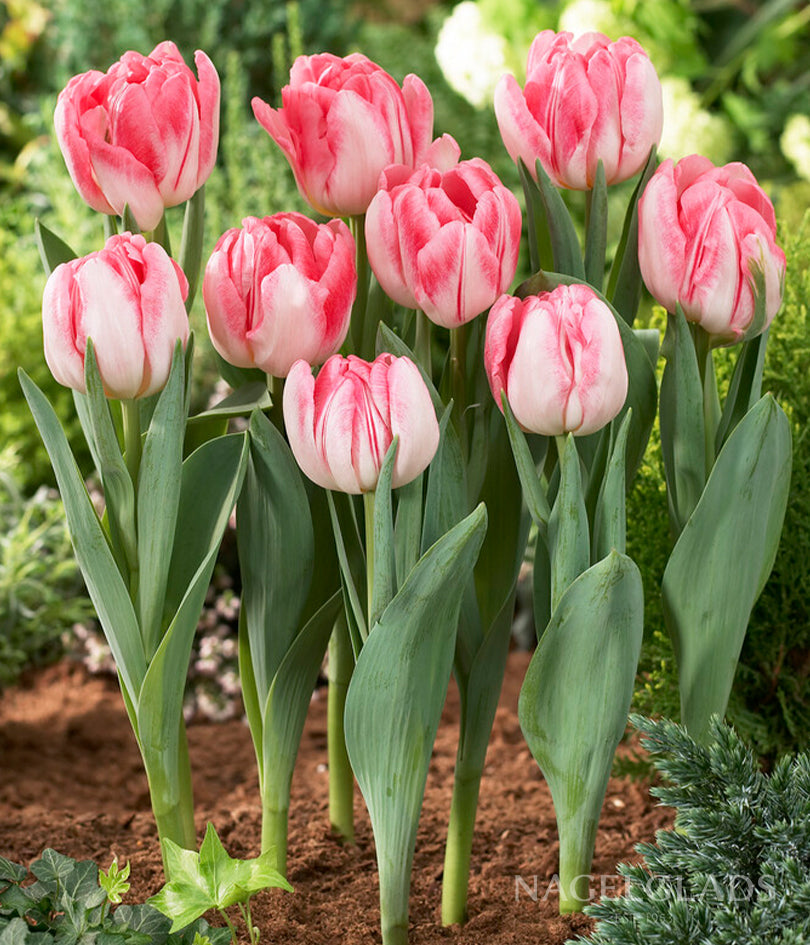
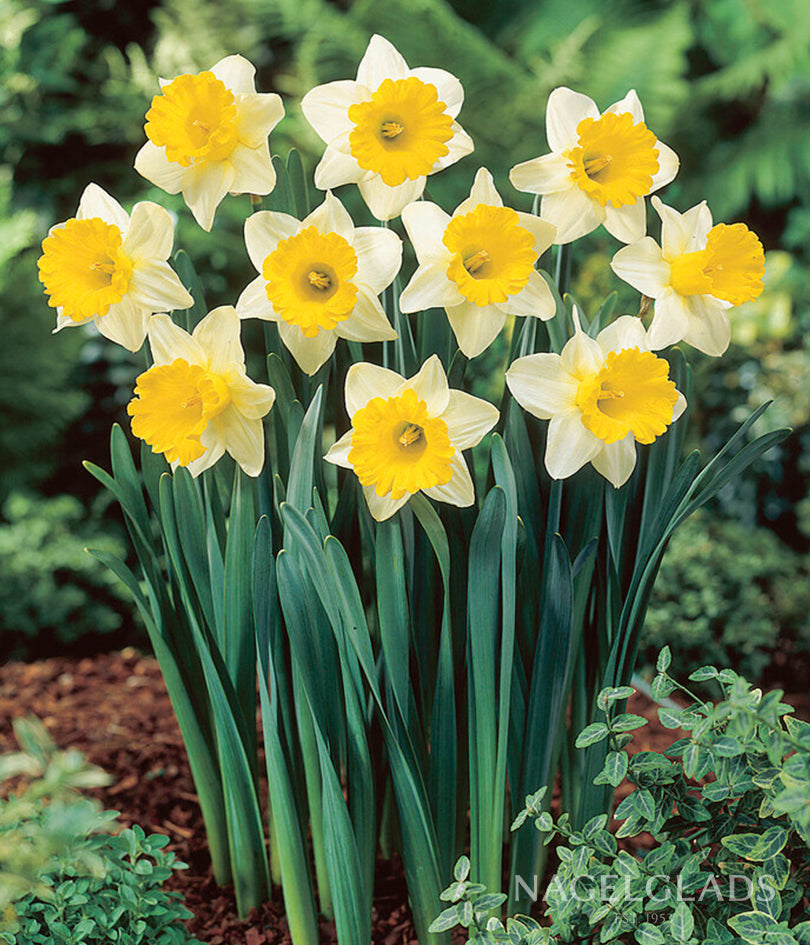
Beyond the Tulips and Daffodils
Tulips and Daffodils are the flowers most gardeners think of first when planning a Fall bulb order, and for good reason. But two of the most beautiful and rewarding Spring flowers in the Nagel Glads catalog tend to get overlooked in that conversation, and both deserve a much closer look. Ranunculus and Bearded Iris are genuinely different from anything else in the Fall planting lineup, in form, in character, and in the way they make a Spring garden feel more complete and layered. If you have never grown either one, this is the season to change that.
Ranunculus: The Flower That Stops People in Their Tracks
Ranunculus blooms have a quality that is difficult to describe until you have seen one up close. The petals are thin, papery, and layered in tight concentric circles that create a bloom so full and intricate that most people assume they are looking at a small garden rose or a peony rather than a flower grown from a corm the size of a walnut. The blooms can reach four to five inches across in the best conditions, and they come in a remarkably wide range of colors from pure white and pale blush through vivid coral, deep burgundy, bright yellow, and rich orange. There is a reason Ranunculus are among the most popular flowers with professional florists and flower growers, and that reason becomes immediately obvious the first time you hold a freshly cut stem.
Rainbow Mixed Ranunculus Flower Bulbs include the full spectrum of warm and cool tones in a single order and are the ideal starting point for anyone growing Ranunculus for the first time. Pastel Ranunculus Flower Bulbs offer a softer, more romantic palette of blush pinks, creamy whites, and gentle peach tones that pair beautifully with white Daffodils and soft-toned Tulips in both the garden and the vase. Both are Fall planted bulbs available for pre-order now.
Growing Ranunculus Successfully
Ranunculus are cool-season flowers that perform best when they can grow through moderate temperatures and bloom before Summer heat arrives. In warmer regions of the country, zones 8 through 10, the corms are planted directly outdoors in Fall for early Spring bloom. In colder areas, the corms can be planted in early Spring once the ground is workable, or started in containers indoors and moved outside after the last hard frost. Nagel Glads ships Ranunculus as Fall planted bulbs, and gardeners in colder zones should plan accordingly based on their local conditions.
The corms themselves look unusual. They are small, brown, and claw-shaped, and they look nothing like the flowers they will produce. Plant them two to three inches deep with the claw-like projections pointing downward into well-drained soil in a location that receives full sun. Soaking the corms in room-temperature water for three to four hours before planting rehydrates them after storage and encourages faster root development once they are in the ground. Space corms four to six inches apart, and expect blooms roughly ninety days after planting, with a bloom window that can last four to eight weeks depending on planting time and climate.
One of the most remarkable qualities of Ranunculus for home gardeners and cut flower growers alike is that each corm typically produces multiple flowering stems across its bloom period, which means even a modest planting of twenty or thirty corms can generate a genuinely impressive quantity of stems for cutting. The more you cut, the more the plant continues to produce.
Ranunculus in the Vase
Ranunculus have one of the longest vase lives of any Spring flower, routinely lasting ten days or more when harvested at the right stage. The key is to cut stems when the bud is showing full color but has not yet fully opened. At this stage, the bud should feel slightly soft when given a gentle squeeze. Cut stems will continue to unfurl over several days in the vase, with the blooms opening to their full, lush size indoors where they can be appreciated up close. If cut when already fully open, the blooms are still beautiful but more fragile and will last closer to a week. Place cut stems immediately in clean, cool water and change the water every other day for the best results.

Bearded Iris: The Flower with the Most Personality in the Spring Garden
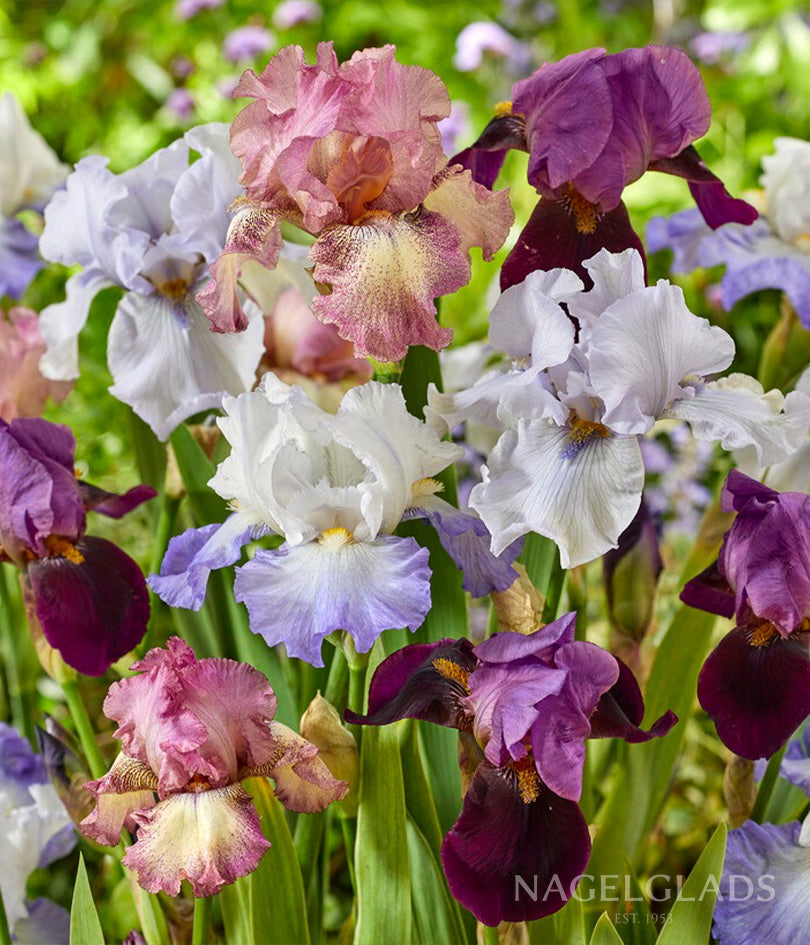
If Ranunculus are the quiet beauty of the Spring garden, Bearded Iris are the ones with the most character. The blooms are large, sculptural, and genuinely unlike any other flower. Each flower is composed of three upright petals called standards, three cascading petals called falls, and a distinctive fuzzy line running down the center of each fall called the beard, which gives the entire group its name. The overall effect is ornate, intricate, and almost architectural, with a ruffled, layered quality that rewards close attention and makes Bearded Iris one of the most photographed flowers in any garden where they appear.
Mixed Bearded Iris Flower Bulbs include a range of colors that can span from deep purples and blues through soft lavenders, warm yellows, clean whites, and rich burgundies. Tall Bearded Iris varieties reach twenty-eight to forty-eight inches in height, producing their blooms on strong stems that rise above sword-shaped foliage in late Spring to early Summer. This bloom timing is significant because it arrives after most Tulips and Daffodils have finished, extending the Spring season into a window that would otherwise go quiet before the first Summer flowers take over.
Growing Bearded Iris Successfully
Bearded Iris grow from rhizomes rather than true bulbs, and their planting requirements are different from everything else in the Fall catalog. The most important detail is planting depth. Bearded Iris rhizomes should be planted at or just barely below the soil surface, with the top of the rhizome visible and exposed to sunlight. This is the opposite of how most bulbs are planted, and burying Bearded Iris rhizomes too deeply is the most common mistake gardeners make with this flower. Deep planting can prevent flowering entirely and creates conditions favorable to rot.
Plant rhizomes in a location that receives full sun and has well-drained soil, spacing them twelve to twenty-four inches apart with the fan of leaves pointing in the direction you want the plant to grow. This wider spacing reflects the fact that Bearded Iris expand each year, with new rhizomes forming alongside the originals and gradually building into larger, more productive clumps over time. Full sun is particularly important for Bearded Iris, as shaded or partially shaded plantings will produce healthy foliage but fewer flowers.
Bearded Iris are notable for requiring very little ongoing care once established. They are drought tolerant after their first season, resistant to deer and most common garden pests, and will continue to produce blooms for years with minimal intervention. The only significant maintenance is dividing the clumps every three to four years when they become crowded, which is a simple task that can be done in late Summer after blooming has finished and actually produces more rhizomes to expand the planting or share with friends and neighbors.
Bearded Iris in the Vase
While Bearded Iris are not the longest-lasting cut flower, they are among the most beautiful for close-up enjoyment indoors. Each stem carries several buds that open in succession over a period of days, with individual blooms lasting three to five days before fading. The intricate petal structure, the ruffled edges, and the distinctive beard are details that are easiest to appreciate in a vase on a kitchen table or beside a reading chair, where the eye can linger over the complexity of each bloom in a way that is harder to do in the garden. Many Bearded Iris varieties also carry a sweet fragrance often compared to grape soda or vanilla, which makes a single stem or a small arrangement a genuinely sensory experience in any room.

How These Two Work Together in the Spring Garden
Ranunculus and Bearded Iris occupy different parts of the Spring calendar, which makes them natural partners in a planting plan designed for extended bloom. Ranunculus bloom in the earlier to mid Spring window, producing their layered blooms alongside Tulips and Daffodils. As the Ranunculus finish and the mid-season bulbs wind down, Bearded Iris step in with their tall, dramatic blooms in the late Spring to early Summer window, carrying the color and interest forward for several more weeks. A garden that includes both has a Spring season that feels genuinely continuous rather than concentrated in a single flush.
In terms of visual contrast, the two could hardly be more different. The dense, rounded, many-petaled form of Ranunculus sits at one end of the spectrum, while the open, architectural, ruffled form of Bearded Iris sits at the other. Together in a mixed Spring border, they create a range of bloom forms that makes the planting feel varied, considered, and full of visual interest.
Top 5 Reasons to Add Ranunculus and Bearded Iris to Your Fall Order
- Ranunculus produce some of the most stunning Spring cut flowers available, with a vase life exceeding ten days
- Bearded Iris bloom after Tulips and Daffodils finish, extending the Spring garden into early Summer
- Both are perennial in the right conditions and return with increasing vigor over multiple seasons
- Each corm or rhizome produces multiple stems, offering generous quantities of blooms from a modest planting
- The contrast in bloom form between the two adds variety and depth to any Spring garden
Two Flowers That Will Change How You Think About Spring
Gardeners who grow Ranunculus and Bearded Iris for the first time almost always wish they had started sooner. Both flowers bring something to the Spring garden that Tulips and Daffodils, as beautiful as they are, simply cannot provide on their own. The layered, romantic lushness of Ranunculus and the tall, sculptural drama of Bearded Iris together create a Spring season that feels richer, longer, and more varied than most gardeners imagined possible. Browse Rainbow Mixed Ranunculus Flower Bulbs, Pastel Ranunculus Flower Bulbs, and Mixed Bearded Iris Flower Bulbs and add both to your Fall pre-order while the selection is at its best.