Log in



Beyond the Cutting Row
Most Gladiolus color advice is written with cutting gardens in mind, where stems are evaluated individually and variety combinations are chosen for what looks good in a vase. Designing with Gladiolus in a landscape context is a different exercise entirely. Here the question is not which colors look good together in an arrangement but how a planting reads within a full environment that includes permanent foliage, hardscape surfaces, neighboring perennials, and the shifting quality of light across the day. Getting that right takes a slightly different approach to color selection, and the results are some of the most striking summer gardens possible.
Start with What Is Already There
Before choosing a single variety, take stock of the fixed elements in the space. The color of hardscape materials like stone, brick, pavers, and fencing creates a backdrop that will either support or compete with whatever Gladiolus palette goes in front of it. Warm-toned brick and terracotta hardscape reads most naturally alongside coral, salmon, apricot, and deep red Gladiolus. Cool gray stone and white-painted structures tend to bring out the best in purple, lavender, white, and blue-toned varieties. Moonlight Shadow Gladiolus Flower Bulbs with their soft lavender-white tones sit beautifully against stone and gravel, while Vuelta Gladiolus Flower Bulbs in warm orange-red come forward strongly against a dark fence or hedge backdrop.
Reading the Foliage Around the Planting
Permanent foliage color has more influence on how Gladiolus read in the garden than most gardeners initially account for. Deep green foliage from shrubs and hedges creates a neutral backdrop that makes almost any Glad color perform well. Bronze or purple-toned foliage, common in ornamental grasses, certain shrubs, and darker-leafed perennials, pairs especially well with deep burgundy, near-black, and warm salmon tones. Silver or gray foliage from plants like artemisia or lamb's ear softens adjacent colors and makes pastel gladiolus feel more intentional and considered. Pastel Mixed Gladiolus Flower Bulbs planted in front of a silver-foliage border become a coordinated palette rather than a random assortment.

Warm and Cool Palettes Behave Differently in the Landscape
A planting built entirely from warm tones, deep reds, oranges, and golden yellows, tends to advance visually, pulling the eye toward it from across the garden. This makes warm palettes particularly effective for focal points, island beds, and plantings designed to be seen from a distance. Cool palettes built from purples, lavenders, and white-toned varieties tend to recede slightly, making them better suited to borders along paths and seating areas where the goal is atmosphere rather than high-contrast drama. Purple Magic Gladiolus Flower Bulbs and Alpha Gladiolus Flower Bulbs together create a deep, moody cool palette that works especially well in shaded or partially shaded sections of the garden where warmer colors would look out of place.
Using Gladiolus to Bridge Seasonal Color Transitions
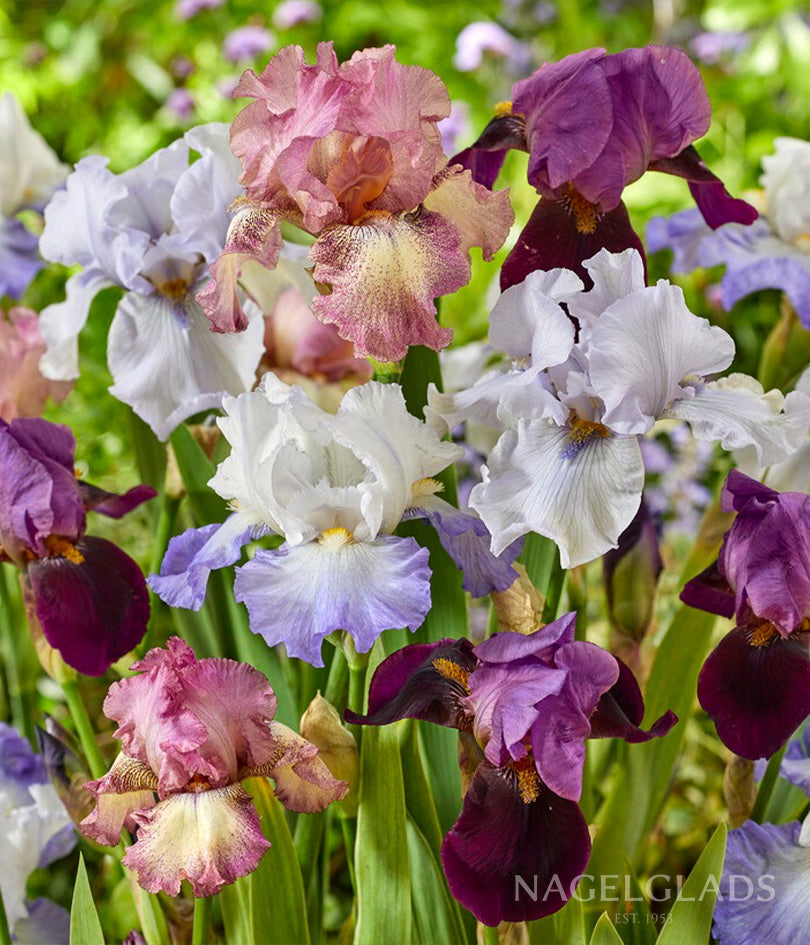
One of the most practical applications of Gladiolus color theory in the landscape is using variety selection to carry a color story that began with Spring-blooming perennials forward into summer. If a border opens the season with soft pinks and whites from peonies or bearded iris, planting Priscilla Gladiolus Flower Bulbs or Fairy Tale Pink Gladiolus Flower Bulbs in the same bed maintains that palette as those earlier bloomers fade. If a garden opens with bold yellow and orange from early perennials, Olympic Flame Gladiolus Flower Bulbs or Bananarama Gladiolus Flower Bulbs keep that warmth going well into late summer without requiring a complete redesign of the space.
The Role of Neutral Varieties
White and near-white Gladiolus varieties are among the most useful in landscape design precisely because they ask very little of the surrounding palette. They create visual breathing room between stronger colors, define the edges of a planting without competing with neighbors, and tend to glow in low evening light in a way that colored varieties do not. Polar Bear Gladiolus Flower Bulbs and Ivory Perfection Gladiolus Flower Bulbs both serve this role reliably. Including at least one white or very pale variety in a mixed landscape planting almost always improves the overall result, regardless of what the rest of the palette is doing.

Top 5 Color Combinations for Landscape Gladiolus Plantings
- Moonlight Shadow with silver foliage and gray stone hardscape for a cool, refined border
- Vuelta against dark hedging or fencing for bold warm contrast
- Purple Magic alongside Ivory Perfection for a classic cool-toned statement bed
- Olympic Flame following early yellow perennials to extend a warm seasonal palette
- Pastel Mixed in front of bronze or silver foliage for a softly coordinated summer display
Let the Garden Tell You What It Needs
The most successful Gladiolus plantings in a landscape context are the ones where variety selection begins with observation rather than a catalog. Spending time in the space at different times of day, noting how existing colors and materials interact with changing light, and choosing varieties that respond to those conditions rather than override them is what separates a planting that feels designed from one that simply feels busy. Browse the full range of Gladiolus by color family and use what is already in your garden as the starting point.