Log in



Flowers in the Darkest Months
There comes a point every Winter when the garden has been quiet long enough that the absence of living flowers starts to feel genuinely noticeable. The beds are dormant, the days are short, and the Spring bulbs planted in October are resting beneath the soil doing their slow, invisible work. This is the season when forcing bulbs indoors becomes one of the most quietly satisfying things a gardener can do. The process is simple, the results are beautiful, and the experience of watching roots develop and shoots emerge and fragrant blooms open on a kitchen windowsill in January is a reminder that growing things is not something that has to stop when the weather turns cold. Two species in the Nagel Glads catalog are ideally suited to indoor forcing, and each offers something slightly different.
Paperwhites: The Easiest Indoor Bulb You Will Ever Grow
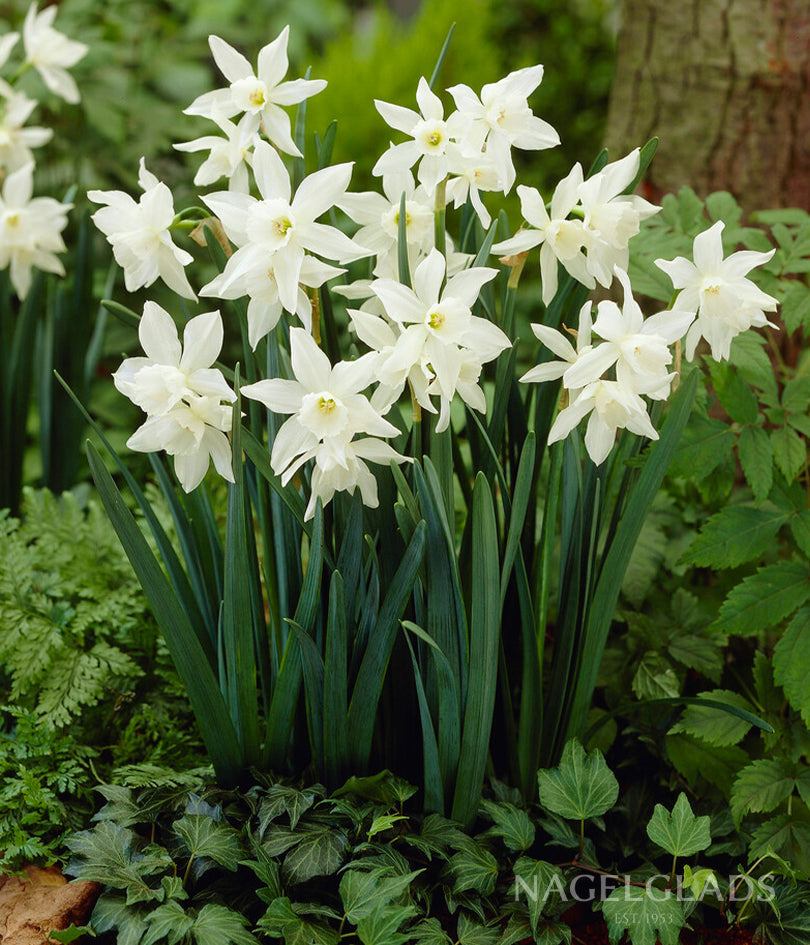
Ziva Paperwhite Flower Bulbs are the simplest and most reliable bulbs for indoor forcing because they require no chilling period at all. Unlike nearly every other Fall-planted bulb, Paperwhites do not need a simulated Winter to trigger blooming. They can be planted in a container and placed on a sunny windowsill at any point during the Fall or Winter months, and they will produce clusters of small, star-shaped, intensely fragrant white blooms within four to six weeks. That timeline makes them one of the most immediately gratifying indoor gardening projects available, and the fragrance they produce can fill an entire room from a single pot.
How to Force Paperwhites Step by Step
Forcing Paperwhites requires almost nothing in the way of special equipment. The most popular method uses a shallow container without drainage holes, a layer of clean pebbles or decorative gravel, water, and the bulbs themselves.
Start by filling the container about halfway with pebbles. Place the bulbs on the pebble surface with the pointed end facing up, spacing them close together so they are nearly touching. The bulbs will support one another as they grow, and a densely planted container produces the fullest, most impressive display. Gently add more pebbles around the lower half of each bulb to anchor them in place, leaving the top half of each bulb exposed above the gravel line.
Add water to the container until the surface reaches just below the base of the bulbs. This is an important detail. The roots need to be able to reach the water, but the bulb itself should not sit in water, as prolonged contact with standing water will cause the bulb to rot. Maintaining this water level throughout the forcing period is the single most important care task.
Place the container in a cool, dark location at roughly 50 to 60 degrees for two to three weeks to encourage strong root development before the shoots begin to grow. When you see green shoots reaching about three inches in height, move the container to a bright, sunny window in a room that stays around 60 to 65 degrees. Warmer rooms will speed up growth but can result in taller, leggier stems that may need support. Cooler rooms produce stockier growth and extend the bloom period once flowers open.
From this point, blooms will typically appear within two to three additional weeks. If the stems grow tall enough to lean, a few slender stakes or a loop of decorative twine around the cluster will keep everything upright.

Succession Planting Paperwhites for Continuous Winter Blooms
One of the best things about Paperwhites is that they lend themselves beautifully to succession planting indoors. Starting a new container every ten days to two weeks throughout the Fall and Winter months creates a continuous supply of fresh blooms and fragrance that can last from November through February. This approach turns a single bag of bulbs into a season-long indoor display rather than a one-time event, and it makes Ziva Paperwhite Flower Bulbs one of the best values in the entire Fall catalog for the amount of beauty they produce relative to their cost. Paperwhites are also one of the most thoughtful homegrown gifts during the holiday season. A small glass container planted with three or four bulbs, given with a brief note about care, is a genuinely personal and beautiful present that most recipients will remember long after the blooms have finished.
Hyacinth: Fragrance Worth Waiting For
Where Paperwhites offer speed and simplicity, forcing Mixed Hyacinth Flower Bulbs indoors offers something different: the deepest, richest fragrance of any bulb you can grow, and the satisfaction of a process that requires a bit more patience and involvement. Hyacinth bulbs need a chilling period of roughly ten to fourteen weeks at temperatures between 35 and 48 degrees before they will produce proper blooms indoors. This means planning ahead, but the reward for that planning is a flower with a fragrance so intense and sweet that a single blooming spike can scent an entire room.
How to Force Hyacinth Step by Step
The chilling period is the essential first step. Place Hyacinth bulbs in a paper bag and store them in a refrigerator, an unheated garage, a cold basement, or any consistently cool location that stays between 35 and 48 degrees. One important note: do not store Hyacinth bulbs near ripening fruit, especially apples and pears, as the ethylene gas released by the fruit can damage the bulbs during their chilling period. Check on the bulbs periodically to make sure they remain dry and firm. If you want Hyacinth blooms in late January or February, start the chilling process in October or early November.
After ten to fourteen weeks of chilling, the bulbs are ready to plant. Hyacinth can be forced in a pot with standard potting mix or over water using a special forcing vase with an hourglass shape that holds the bulb above the waterline. Both methods produce beautiful results.
For soil forcing, plant the chilled bulbs in a pot with the pointed end up and the tip of the bulb just above the soil surface. Water thoroughly and place the pot in a cool, dark location for one to two weeks to encourage root development. When shoots reach about two inches in height, move the pot to a bright window with indirect light and temperatures around 60 to 65 degrees. The blooms will typically appear within three to four additional weeks.
For water forcing, fill the vase until the water sits just below the base of the bulb without touching it. Place the vase in a cool, dark spot until roots have filled the lower chamber and the shoot has reached about two inches. Then move to a bright window as described above. Check the water level regularly and top up as needed to keep it just below the bulb base.
One practical note: Hyacinth bulbs have a powdery coating that can irritate sensitive skin when handled. Wearing lightweight garden gloves during planting is a simple precaution that prevents any discomfort.

Choosing Between the Two
Paperwhites and Hyacinth offer genuinely different indoor forcing experiences, and there is no reason to choose only one. Ziva Paperwhite Flower Bulbs are the better choice for immediate gratification, holiday gifts, and continuous Winter blooms through succession planting. Mixed Hyacinth Flower Bulbs and Mixed Pastel Hyacinth Flower Bulbs are the better choice for the deepest possible indoor fragrance and the satisfaction of a longer, more involved process that produces a spectacular result. Growing both through the Winter months creates a season of indoor flowers that begins with Paperwhites in November and December and continues with Hyacinth blooms in January and February, carrying fragrance and color through the entire cold season.
Timing for Holiday Blooms
For gardeners who want blooms on or around the Winter holidays, working backward from the desired bloom date makes planning straightforward. Paperwhites planted in early to mid November will typically bloom in time for holiday gatherings in late December. Hyacinth bulbs that begin their chilling period in early October will be ready to plant and begin their growth phase in late December or January, with blooms following three to four weeks later. Starting succession plantings of Paperwhites in October and chilling Hyacinth bulbs at the same time creates a Winter bloom calendar that covers the full season from Thanksgiving through Valentine's Day.
Top 5 Tips for Forcing Bulbs Indoors
- Maintain the water level just below the base of the bulb throughout the forcing period to prevent rot
- Start Paperwhites every ten days to two weeks for continuous Winter blooms
- Chill Hyacinth bulbs for a minimum of ten weeks at 35 to 48 degrees before planting
- Keep forcing containers in a cooler room to produce stockier stems and longer-lasting blooms
- Wear gloves when handling Hyacinth bulbs to prevent skin irritation from their powdery coating
A Winter Garden on the Windowsill
Forcing Paperwhites and Hyacinth indoors is one of the most accessible and rewarding ways to stay connected to the rhythm of growing things during the months when the outdoor garden is at rest. The process is simple enough for a complete beginner and satisfying enough to become a Winter ritual that you look forward to every year. Ziva Paperwhite Flower Bulbs, Mixed Hyacinth Flower Bulbs, and Mixed Pastel Hyacinth Flower Bulbs are all available now as part of the Fall pre-order catalog. Add them to your order alongside your outdoor plantings and give yourself something beautiful to look forward to when the garden goes quiet and the windowsill becomes the warmest spot in the house.