Log in




Every Flower Has a Story Older Than Your Garden
There is something fitting about pausing at this time of year, when the garden is quieting down and the evenings are getting longer and cooler, to consider the deeper stories that live inside the flowers we tend. Long before anyone was reading variety descriptions in a catalog or calculating planting depths, flowers carried meanings, warnings, blessings, and legends that shaped how entire civilizations thought about the natural world. Many of the species in the Nagel Glads catalog have mythological roots that stretch back thousands of years, and knowing those stories adds a layer of richness to the experience of growing them that no planting guide can provide. This is a post about the folklore, the superstitions, and the surprising histories behind some of your favorite flowers.
Gladiolus: The Little Sword of the Arena
The name Gladiolus comes from the Latin word gladius, meaning sword. The translation is literal: Gladiolus means "little sword," a reference to the long, blade-like leaves that are one of the plant's most distinctive features. In ancient Greece, the same flower was called xiphium, from the Greek word for sword, which tells you something about how universally striking that leaf shape has been to people across cultures and centuries.
The most colorful piece of Gladiolus folklore ties the flower directly to the Roman gladiators. According to legend, gladiators wore Gladiolus corms around their necks during battle as talismans of protection. When a gladiator was victorious, the crowd would shower the arena floor with Gladiolus blooms. An older legend goes further, suggesting that the Gladiolus itself originated from the swords of fallen gladiators, blooming from the ground where their weapons fell. Whether or not any of this is historically precise, the connection between the flower and the fighter is deeply embedded in the plant's cultural identity.

By the Victorian era, the Gladiolus had taken on a gentler meaning in the elaborate language of flowers. Sending someone a Gladiolus was understood to mean "you pierce my heart," a romantic twist on the sword imagery that turned a warrior's flower into a declaration of love at first sight.
Daffodil: The Flower of Narcissus, the Underworld, and New Beginnings
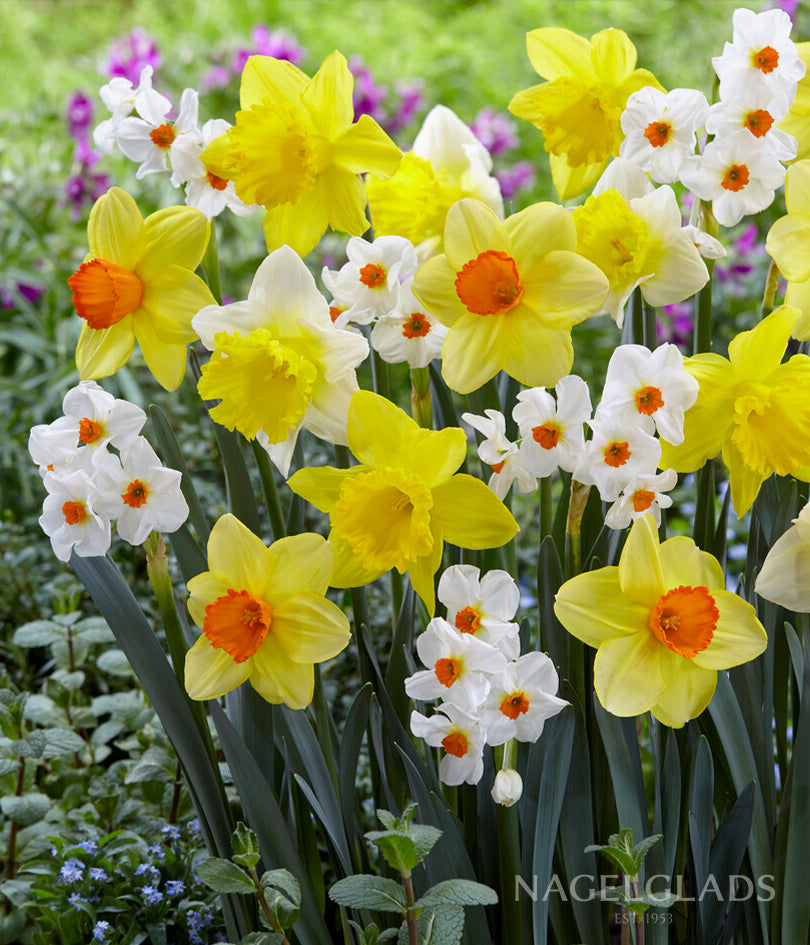
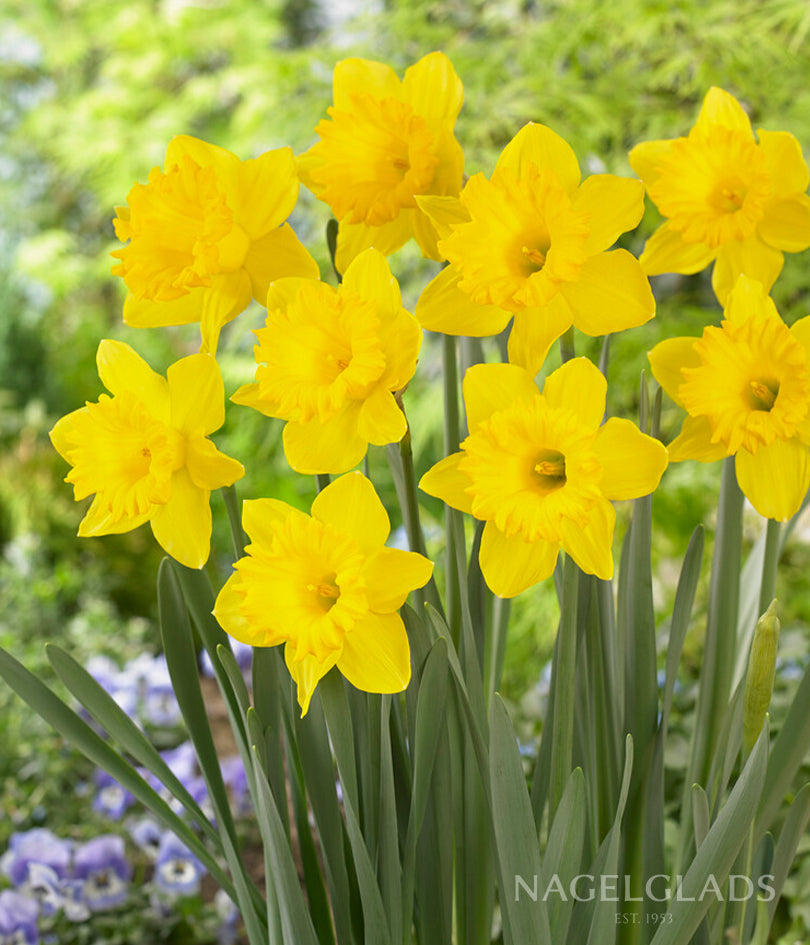
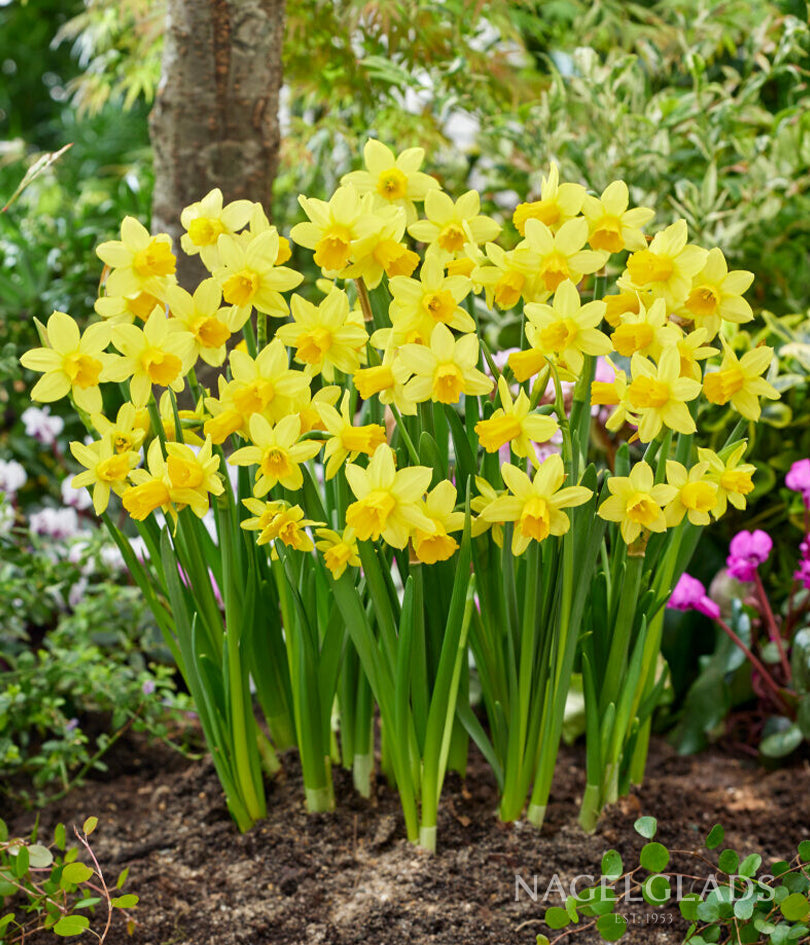
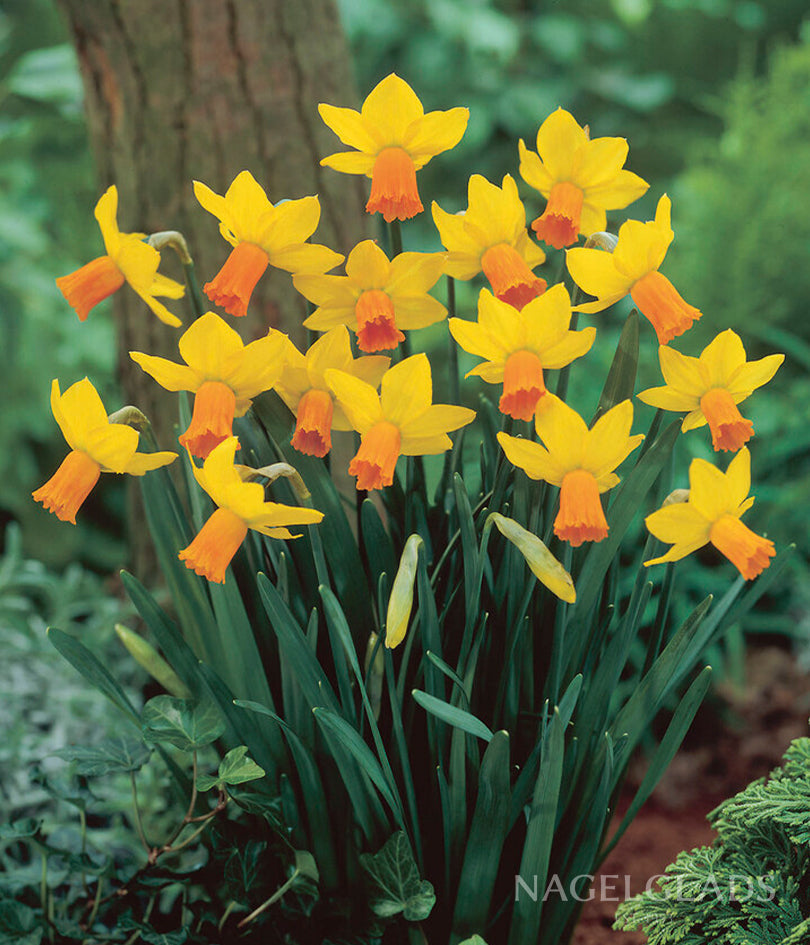
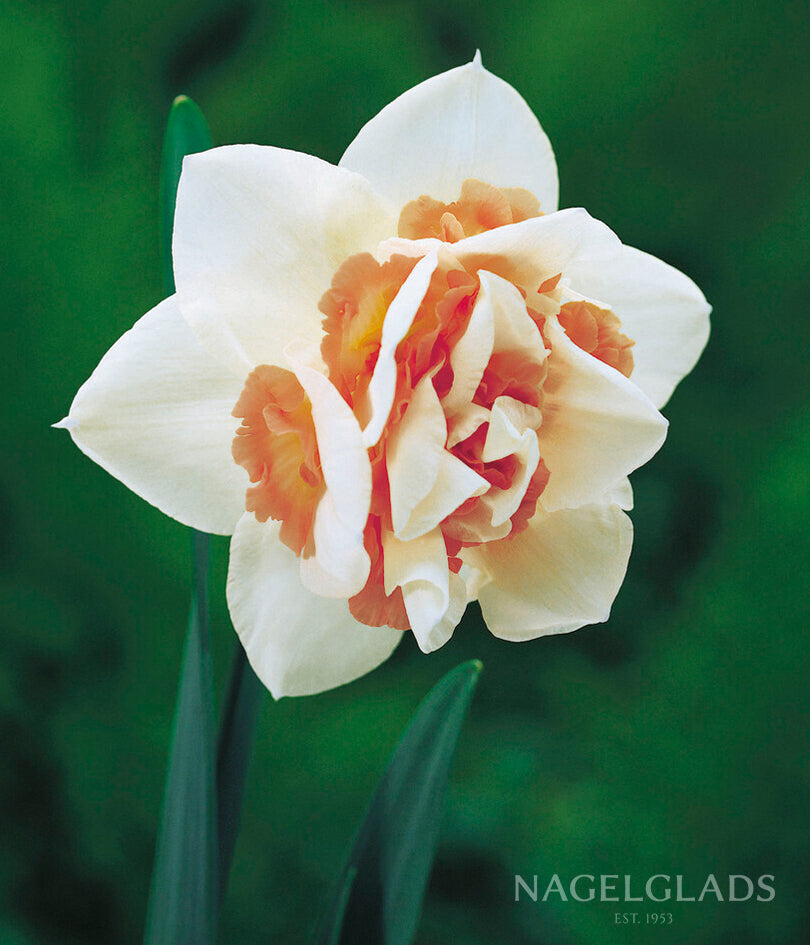
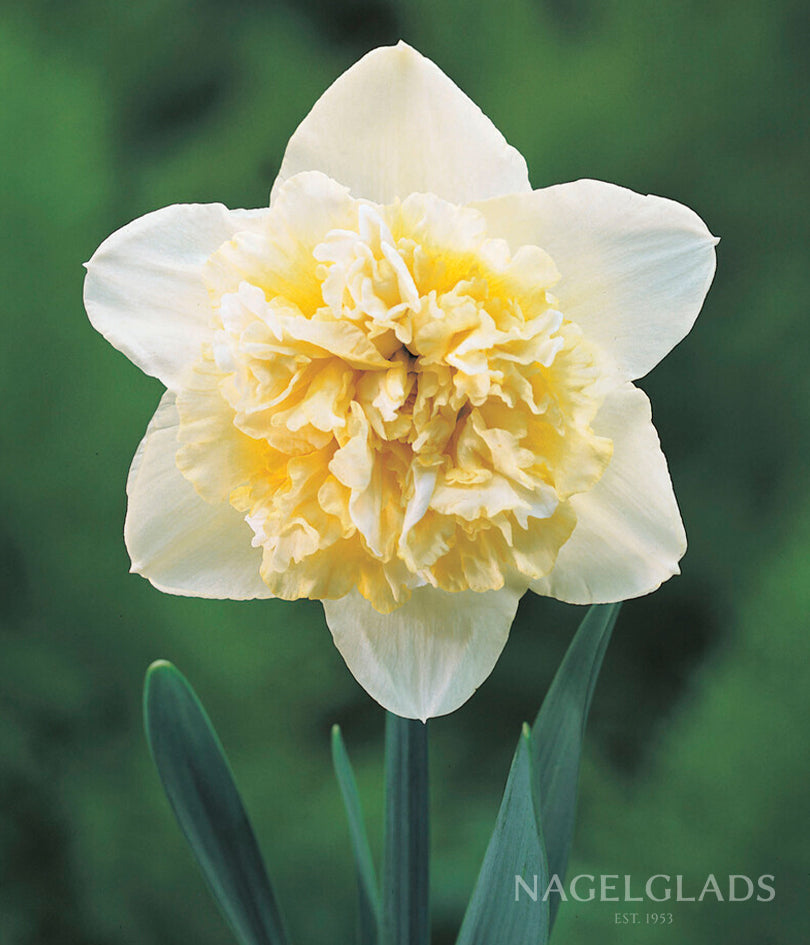
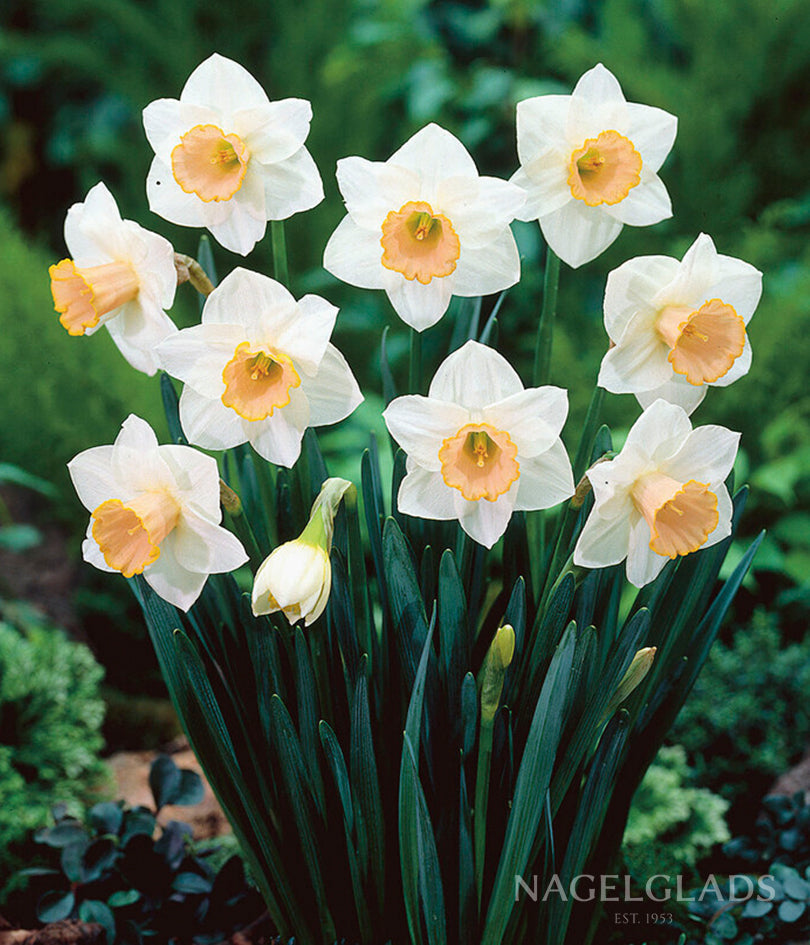
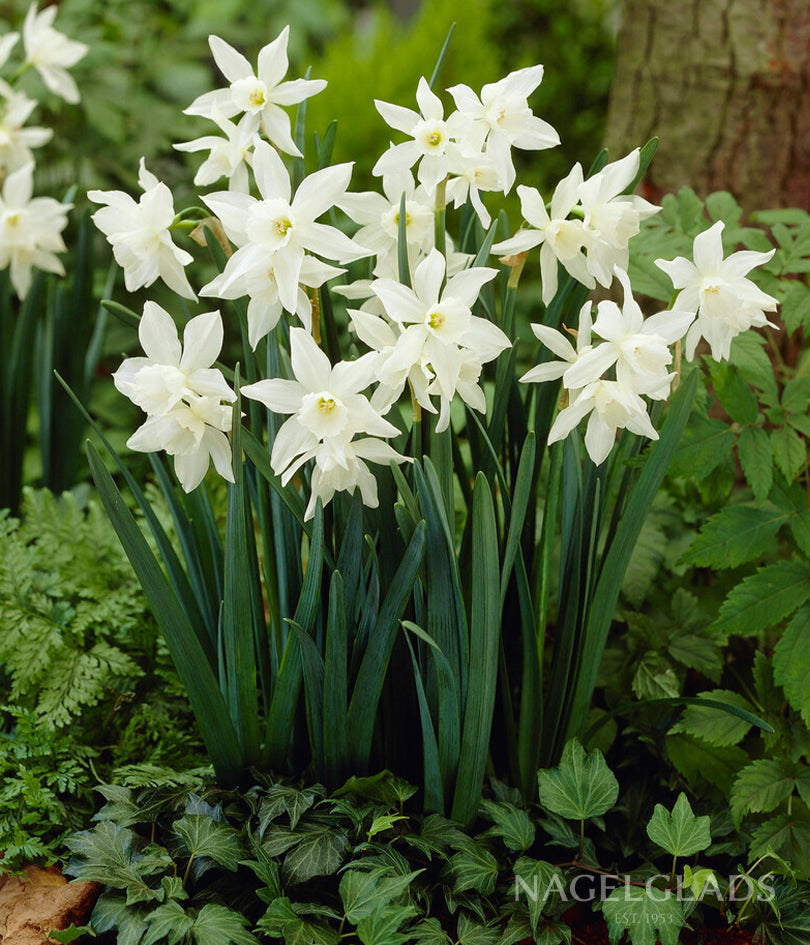
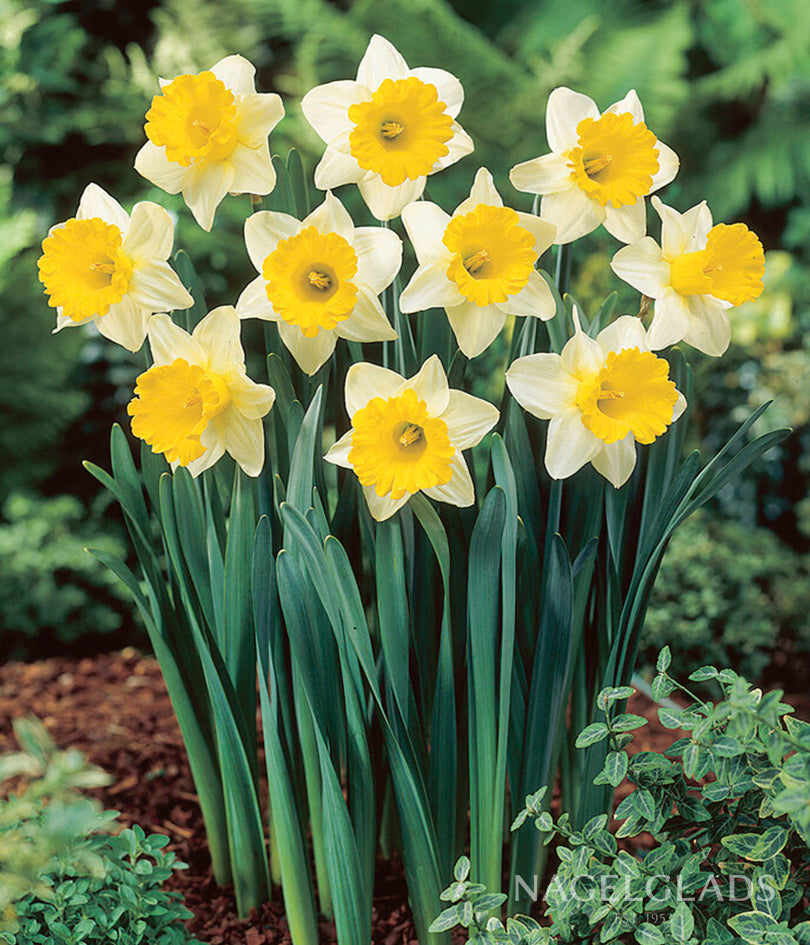
The Daffodil carries one of the most layered mythological histories of any flower in the garden. The genus name, Narcissus, comes from the Greek myth of a beautiful young man who fell so deeply in love with his own reflection in a pool of water that he could not pull himself away. He wasted away beside the pool, and from the place where he died, a flower grew. The story gave us both the word "narcissism" and one of the most recognizable Spring flowers on earth.
But the Daffodil's mythological connections go deeper than vanity. In the myth of Persephone, the young goddess was gathering Daffodils in a meadow when Hades, god of the underworld, abducted her and carried her beneath the earth. Her eventual return each Spring became the ancient Greek explanation for the changing seasons, and the Daffodil became inseparable from the idea of seasonal rebirth, of light returning after a long darkness. The ancient Greeks, Romans, and Egyptians all associated the Daffodil with death and the afterlife, and Roman soldiers reportedly carried Daffodil bulbs with them as a form of last resort due to the bulb's narcotic and toxic properties.
Over the centuries, the flower's symbolism gradually shifted from death toward hope and renewal, and today the Daffodil is one of the most universally recognized symbols of Spring and new beginnings. That full arc, from the underworld to the first bright blooms of the season, is part of what makes planting Mixed Daffodil Flower Bulbs in Fall feel like participating in something much older than a single garden season.

Tulip: Persian Love, Ottoman Devotion, and Dutch Obsession
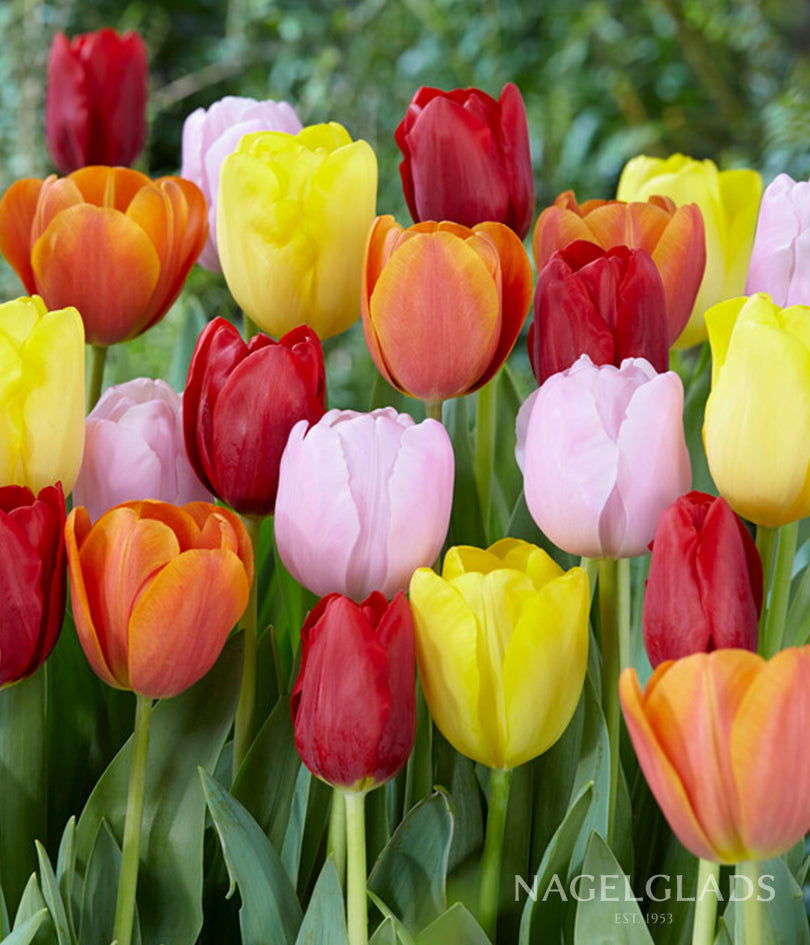
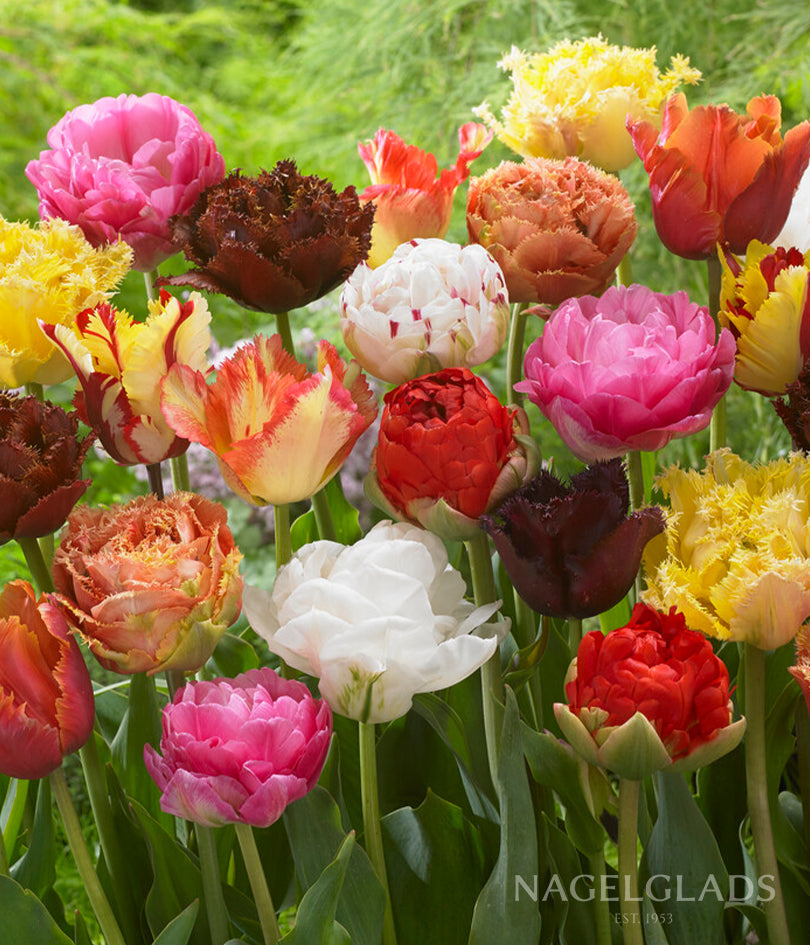
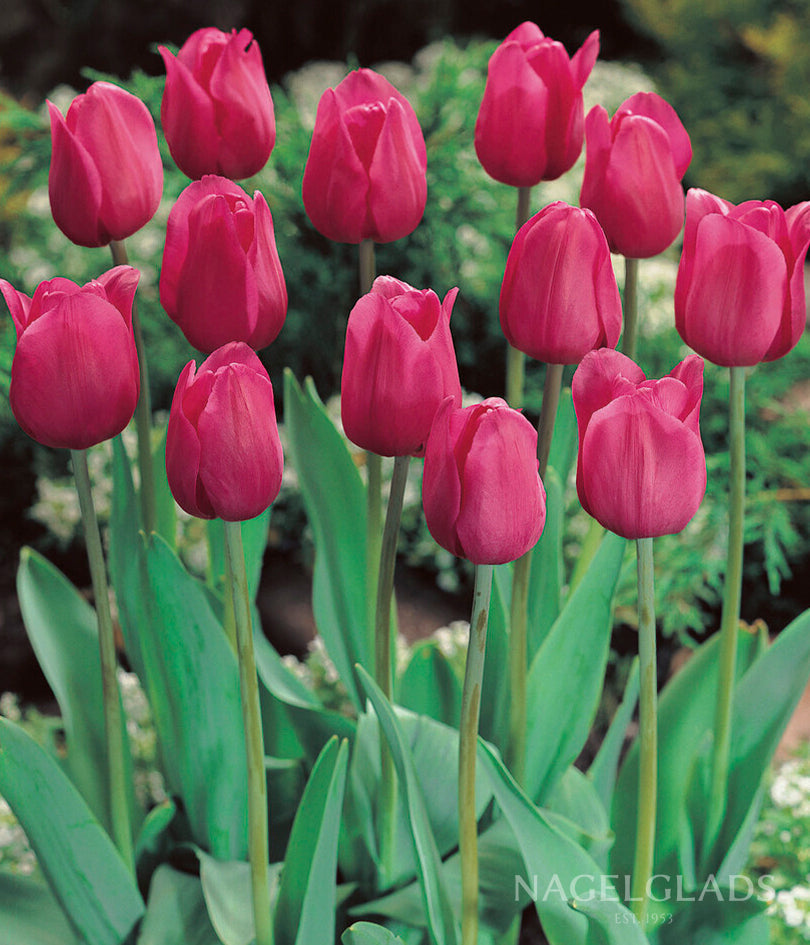
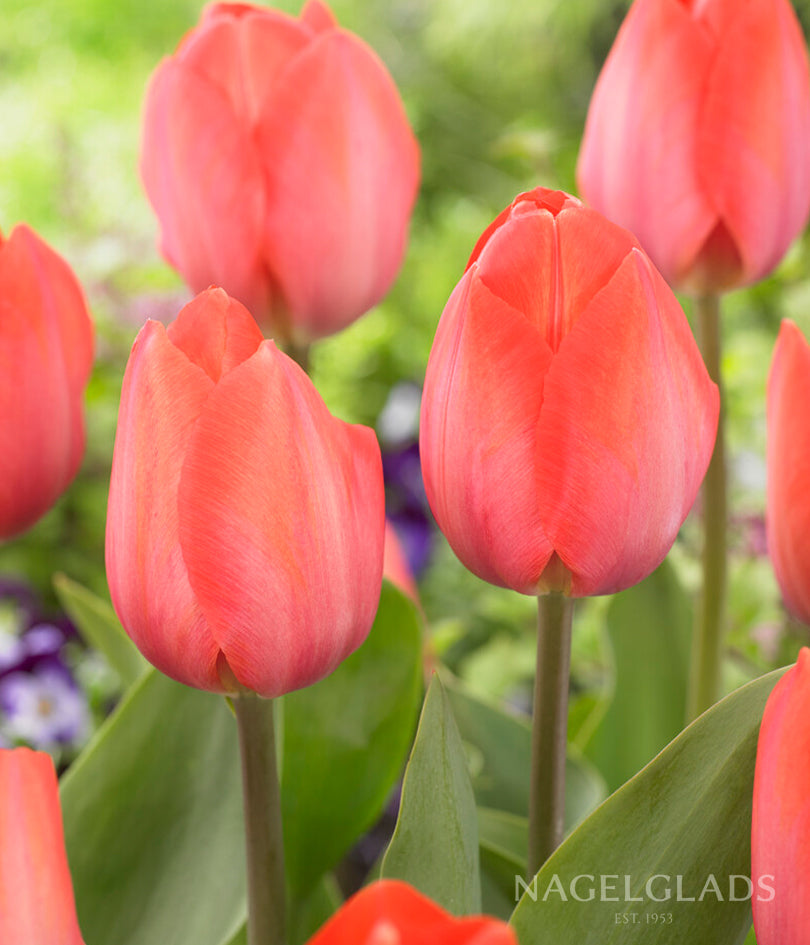
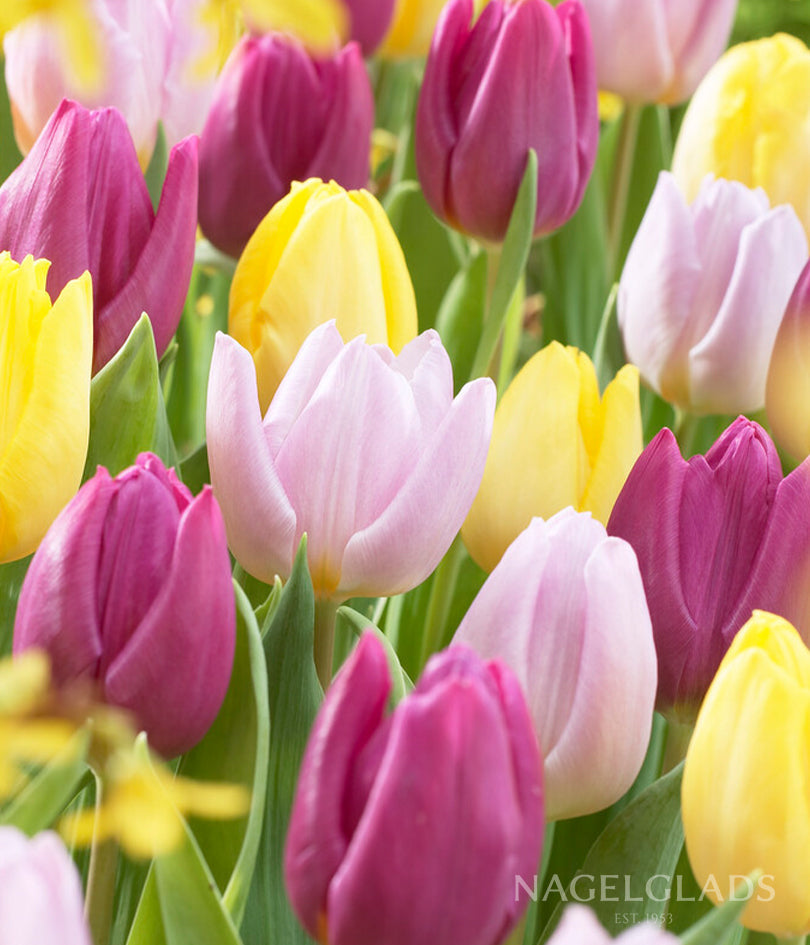
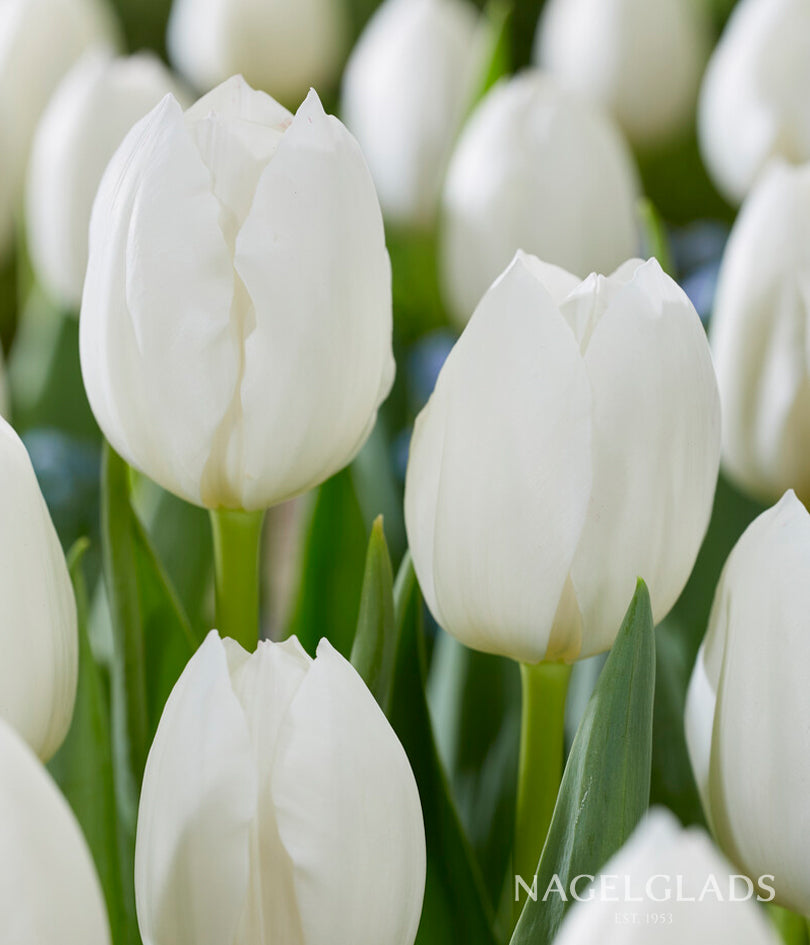
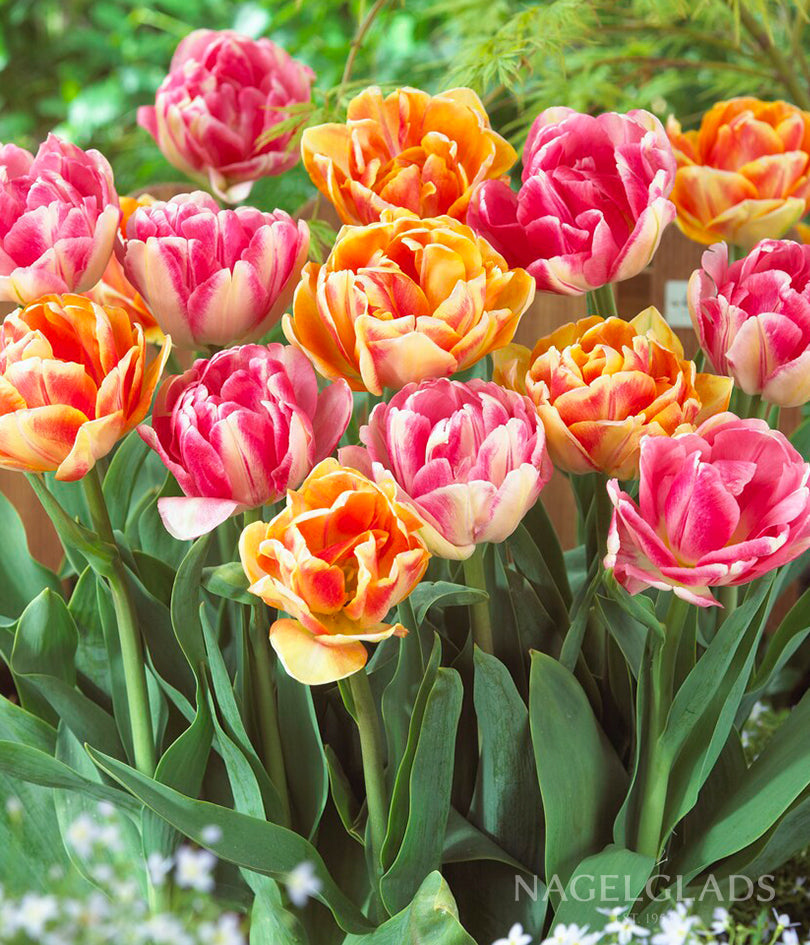
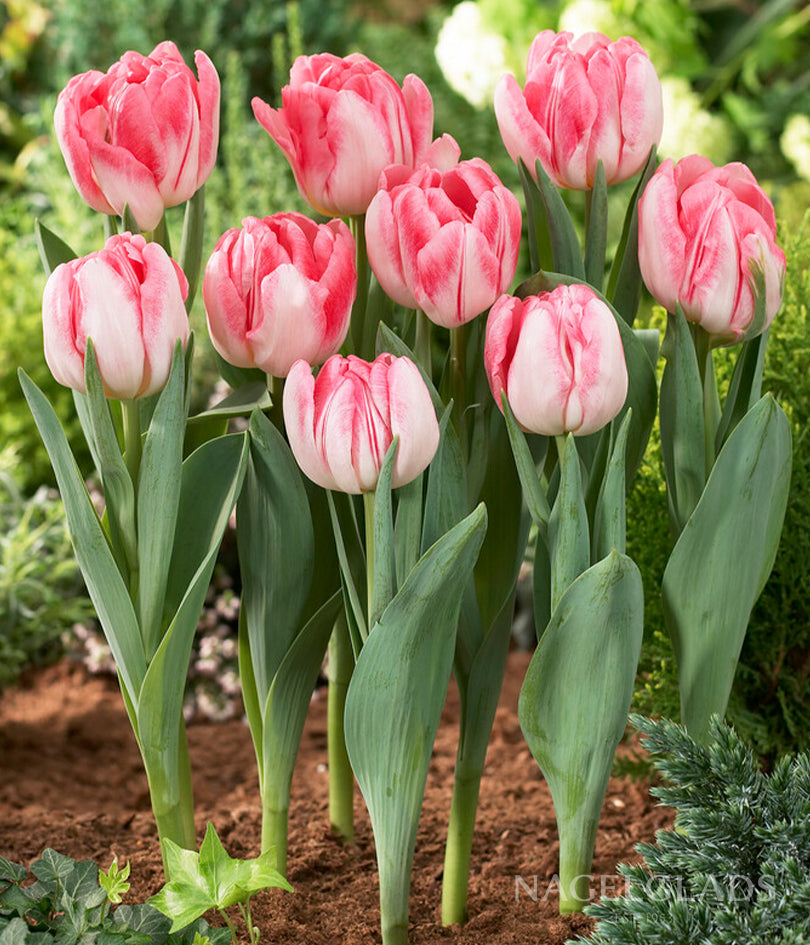
Tulips grew wild in the mountains of ancient Persia long before they became one of the most commercially important flowers in the world. Persian folklore tells the story of Ferhad, a young man who fell hopelessly in love with a woman named Shirin. When she did not return his feelings, Ferhad rode into the desert to die of a broken heart, and red Tulips sprang from the drops of his blood where they fell on the sand. This origin story made the Tulip a symbol of passionate, all-consuming love in Persian culture, a meaning that carried forward as the flower moved westward.
The Ottoman Empire elevated the Tulip to a symbol of paradise and divine perfection. Tulips appeared in tile work, textiles, poetry, and palace gardens across the Ottoman world, and the period of Sultan Ahmed III's rule in the early 18th century became known as the Tulip Era for the intensity of the court's devotion to the flower. When Tulip bulbs reached the Netherlands in the late 16th century, the stage was set for one of the most famous episodes in economic history: Tulip Mania. During the 1630s, rare Tulip bulbs were traded for prices exceeding the value of houses and land. The market eventually collapsed, but the Dutch love affair with the Tulip never did, and the Netherlands remains the center of the global Tulip bulb industry to this day.
Lily: Between Purity and the Underworld
Lilies occupy a fascinating space in flower folklore because they are simultaneously associated with purity and the afterlife, with innocence and with the boundary between the living and the dead. In Greek mythology, Lilies were said to have sprung from drops of milk from Hera, queen of the gods, as she nursed the infant Heracles. Ancient Egyptian mythology linked the Lily to Osiris, god of death, rebirth, and the passage between worlds. Celtic folklore considered the Lily a flower of the faerie realm, with the power to open locks and break enchantments.
In Christian tradition, the white Lily became one of the most enduring symbols of the Virgin Mary's purity, appearing in countless paintings of the Annunciation across centuries of European art. And in older folk traditions, Lilies were said to have the ability to guide lost souls back to the world of the living on Halloween night, when the boundary between worlds was believed to be at its thinnest. That combination of beauty, purity, and a quiet connection to the unseen world is part of what makes Stargazer and Casa Blanca Oriental Lily Flower Bulbs feel so distinctive in the garden. There is a depth to these flowers that goes beyond their physical beauty and their remarkable fragrance.

Iris: The Rainbow Messenger
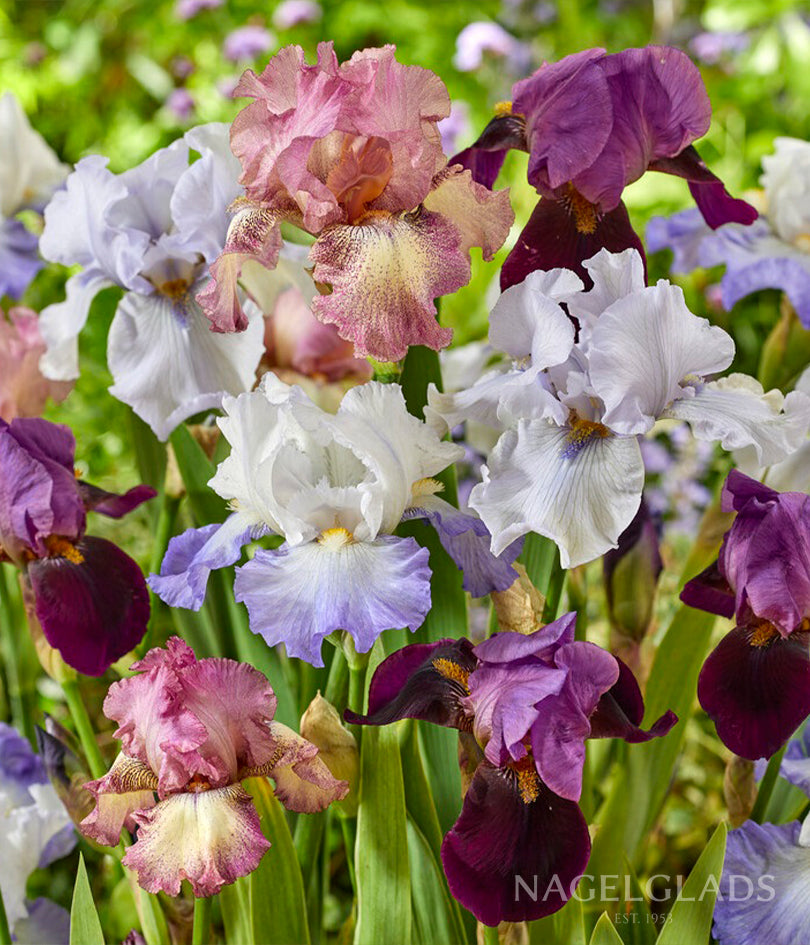
The Iris takes its name directly from the Greek goddess Iris, who served as the messenger of the gods and traveled between the world of the living and the realm of the divine along a path made of rainbows. In Greek tradition, Iris had a particular connection to the souls of women, guiding them safely to the afterlife. Purple Irises were planted on the graves of women throughout the ancient Greek world as an invocation for the goddess to come and lead the departed soul to its rest.
The flower's connection to royalty came later, through the famous fleur-de-lis. Although the symbol translates literally as "flower of the lily," historians believe the original flower was actually the Iris, which grew abundantly along the River Lys in France. The symbol became associated with French royalty, and eventually with monarchy, authority, and nobility across Europe. Mixed Bearded Iris Flower Bulbs carry all of that layered history in their intricate, ruffled bloom form, and planting them in a Fall garden connects you to one of the oldest and most symbolically rich flowers in the Western world.
Hyacinth: Apollo's Grief
The Hyacinth takes its name from one of the most poignant stories in Greek mythology. Hyacinthus was a beautiful young man loved by Apollo, god of the sun. One day while the two were throwing a discus together, the discus struck Hyacinthus and killed him. Overcome with grief, Apollo refused to let Hades take the young man's soul and instead transformed his blood into a flower. According to the legend, the markings on the Hyacinth's petals spelled the Greek letters "AI," which was Apollo's cry of anguish. The flower has been associated with deep sorrow, sincere apology, and the bittersweet beauty of loss ever since.
It is a surprisingly heavy origin for a flower that most modern gardeners associate with cheerful Spring fragrance and bright color. But knowing the story adds something to the experience of forcing Mixed Hyacinth Flower Bulbs indoors on a Winter windowsill and watching those dense, fragrant spikes emerge from what looked like a dormant, lifeless bulb just weeks before. There is a rebirth in that process that the ancient Greeks would have understood perfectly.

Allium: The Ancient Protector
Allium, the ornamental onion, belongs to a plant family with some of the oldest protective folklore in the world. Onions and garlic have been credited with warding off evil spirits, vampires, plague, and bad luck across nearly every culture that has grown them. Ancient Egyptians revered the onion as a symbol of eternity, seeing in its concentric rings a representation of the universe's layered structure. Medieval Europeans hung braids of garlic and onions in doorways and barns to protect against malevolent forces, and the practice has persisted in folk traditions long after the original beliefs faded.
In the garden, Allium's protective reputation has a practical basis that modern gardeners still take advantage of. The sulfur compounds that give the onion family its distinctive scent genuinely repel deer, rabbits, voles, and many insect pests. Planting Purple Sensation Allium Flower Bulbs alongside Tulips is not just a beautiful design choice; it is a contemporary version of the same protective interplanting that gardeners have practiced for centuries, using the onion family's natural defenses to shield more vulnerable plants from harm.
Garden Superstitions Worth Knowing
Beyond the mythology of individual flowers, the practice of gardening itself has accumulated centuries of superstitions and folk traditions that many gardeners still follow, sometimes without realizing how old the customs are.
Planting by the phases of the moon is one of the oldest and most widespread garden traditions. The belief was that a waxing moon (growing toward full) encouraged above-ground growth, while a waning moon encouraged the development of roots, bulbs, and tubers underground. This made the waning moon the traditional time to plant flower bulbs, and while modern science has not confirmed a direct mechanism, the practice persists among gardeners around the world.
White flowers were historically considered unlucky in many European traditions, associated with death and mourning rather than celebration. The superstition has faded considerably, and today white flowers are among the most popular choices for weddings and joyful occasions, but the old association lingers in certain folk traditions, particularly around the custom of never bringing certain white flowers indoors.
One of the more charming garden superstitions holds that stolen plant cuttings root better than ones given freely. Another claims that threatening a barren fruit tree with an axe in early Spring will frighten it into producing. And in older English gardening folklore, certain planting tasks were timed not by soil temperature but by what else was blooming in the landscape: plant potatoes when the forsythia blooms, set out peppers and eggplant when the Bearded Iris is in flower.

Top 5 Flowers with the Most Fascinating Folklore
- Gladiolus for the legend of the Roman gladiators and the Victorian meaning of "you pierce my heart"
- Daffodil for the myth of Narcissus, Persephone, and the ancient association with both death and rebirth
- Lily for the connection to Hera's milk, the faerie realm, and the guiding of souls on Halloween night
- Iris for the rainbow goddess who carried messages between the living world and the divine
- Hyacinth for Apollo's grief and the transformation of loss into something beautiful
The Stories Live in the Garden
Knowing the folklore behind the flowers you grow does not change how deep to plant a bulb or when to water a bed. But it changes the way the garden feels, especially at this time of year when the light is lower and the evenings are longer and there is space to notice the quieter qualities of the space you have tended all season. The flowers resting in the soil right now carry stories that stretch back to ancient Greece, Persia, Egypt, and medieval Europe. The ones you order this Fall will carry those same stories forward into your garden next Spring. Browse the full range of Fall Planted Bulbs and Spring Planted Bulbs and choose the varieties whose stories speak to you most.