Log in



When planting hundreds of bulbs at once, your design choices can transform a simple garden into a breathtaking spring display. Color theory offers a framework that helps gardeners and landscapers make intentional choices about how hues interact across the seasons. With Tulip mixes, Daffodil blends, and Alliums, you can create coordinated plantings that carry visual harmony and dramatic impact at just the right time in spring. And with Gladiolus pre-orders shipping in spring, you can extend that same approach into mid- and late-summer.
Complementary Color Pairings: Bold and Striking
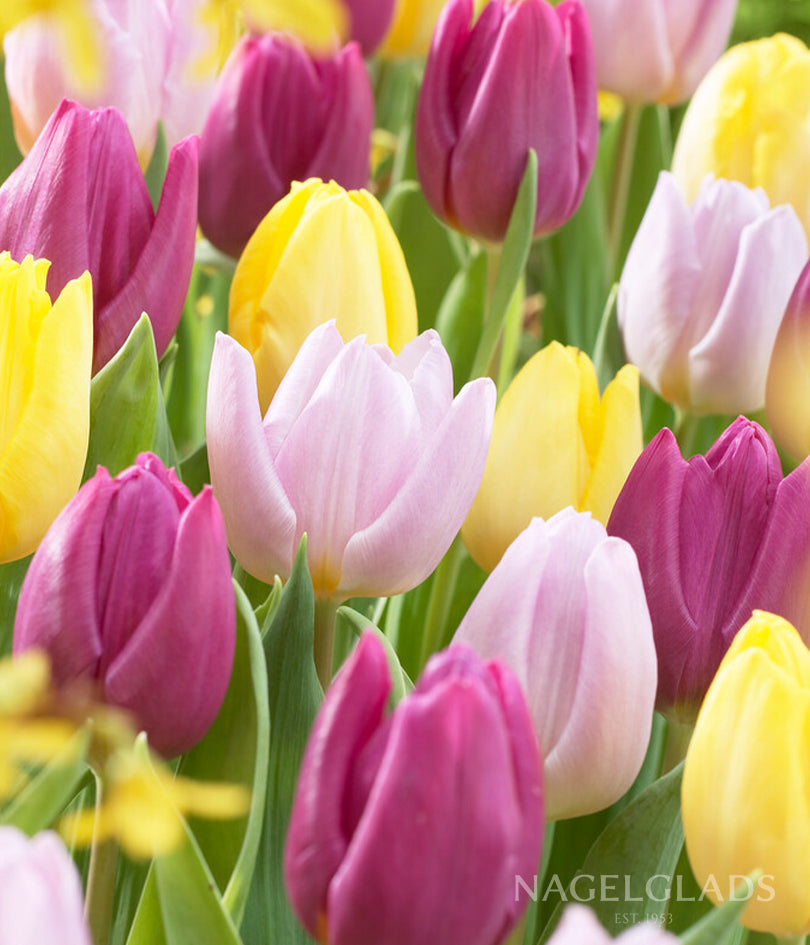
Complementary colors are directly opposite on the color wheel, like purple and yellow or red and green. These pairings create high-contrast, energetic displays that stand out in large plantings.
- Purple Sensation Allium and Strong Gold Triumph Tulip bloom in sequence, giving mid-to-late spring borders an unforgettable pop.
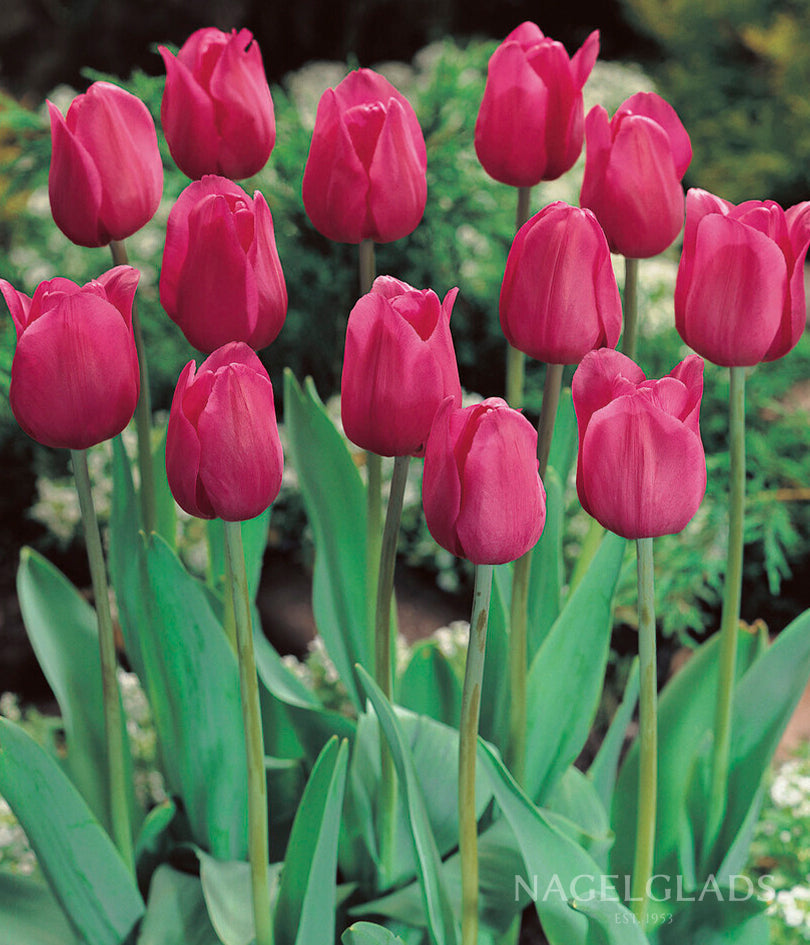
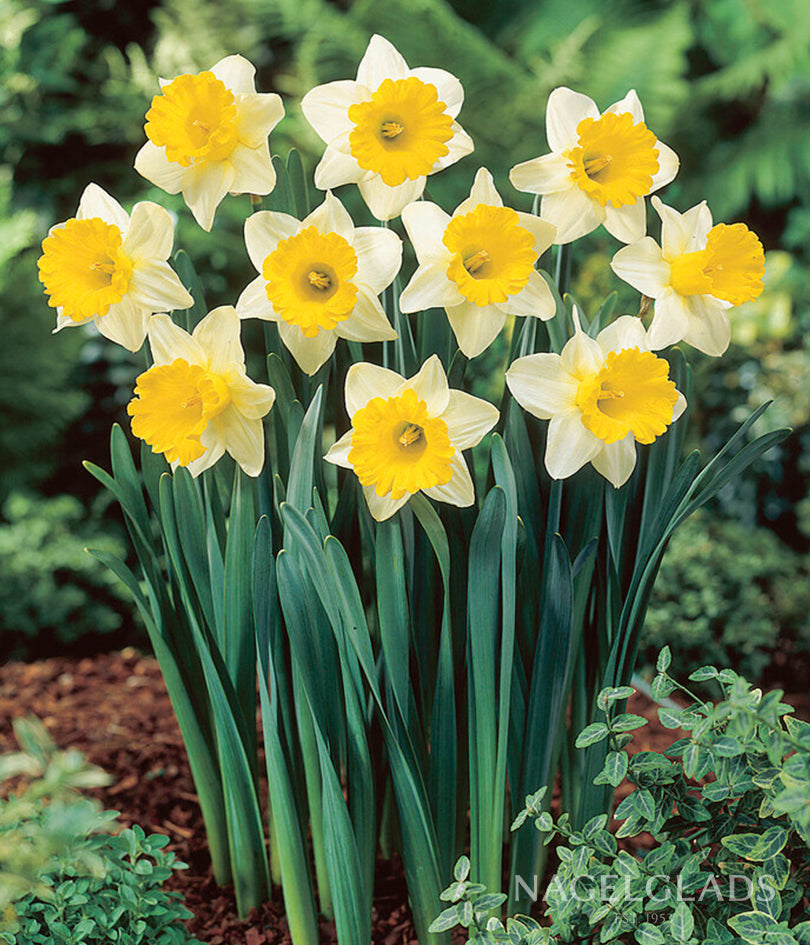
- Negrita Triumph Tulip (deep violet-purple) combined with Carlton Daffodils (classic golden yellow) offers a timeless spring pairing.
- For summer planning, pair Purple Magic Gladiolus with the golden-orange tones of Olympic Flame Gladiolus. The upright spires echo the contrast of purple and yellow, but with later seasonal drama.
- Another strong combination is Red Balance Gladiolus with Green Star Gladiolus. The complementary red-green pairing ensures your summer beds carry just as much energy as spring’s tulip displays.
Analogous Color Schemes: Harmonious Flow
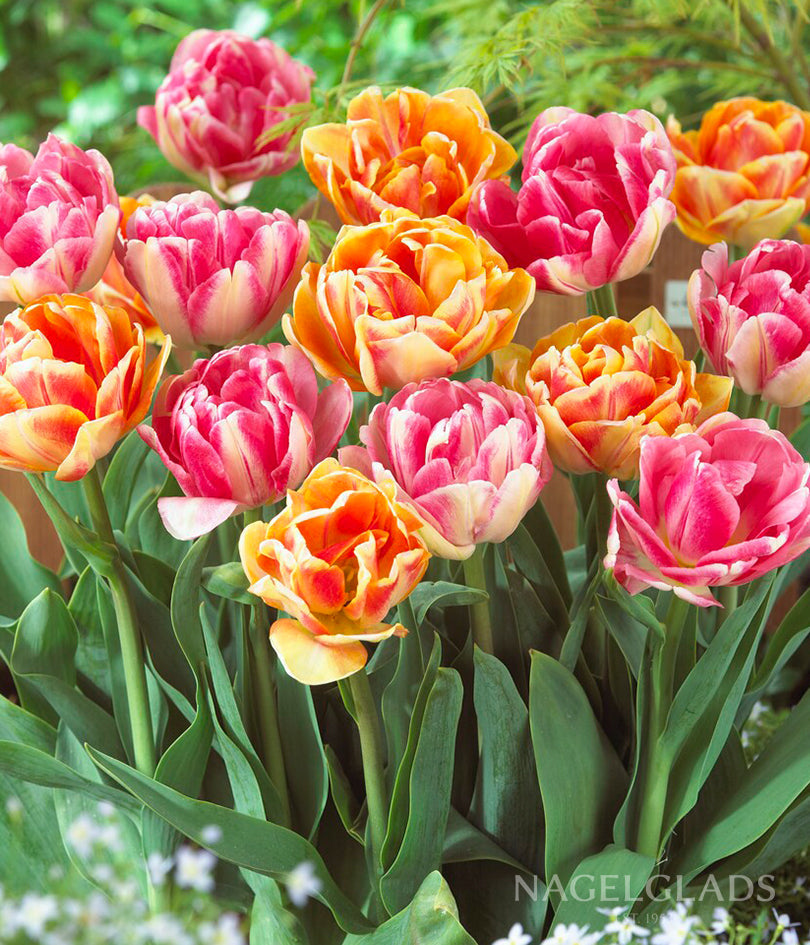
Analogous colors are side by side on the color wheel, such as reds, oranges, and yellows. They create cohesion and warmth when planted en masse.

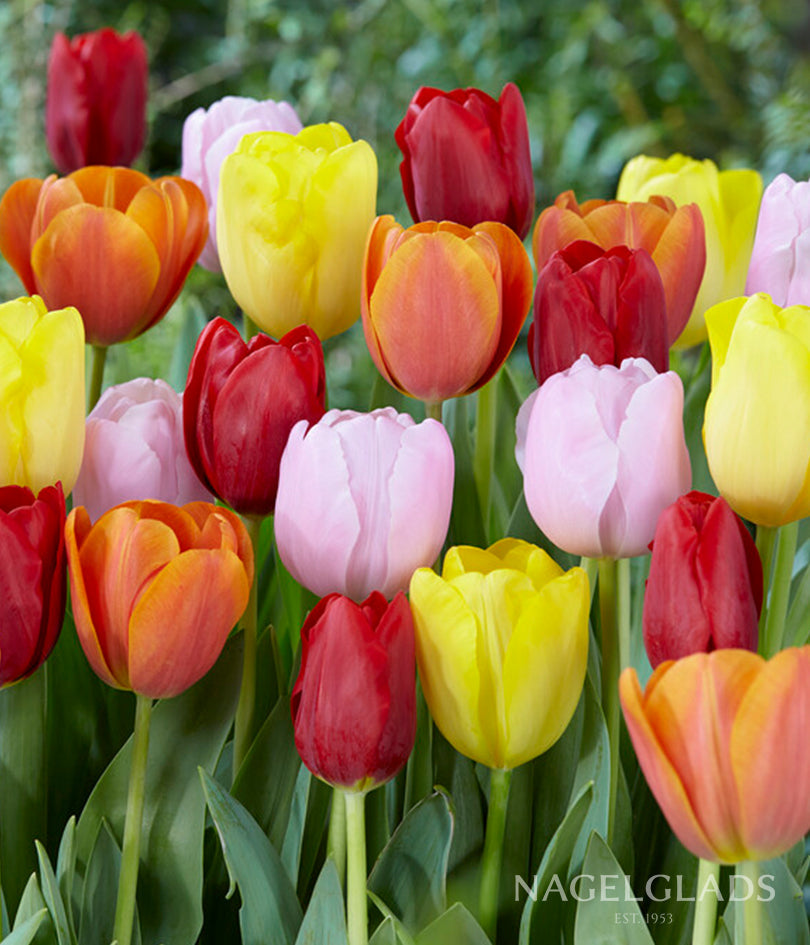
- Plant Orange van Eijk Darwin Tulips, Happy Generation Triumph Tulips, and Goblet Daffodils together for a cheerful, fiery display.
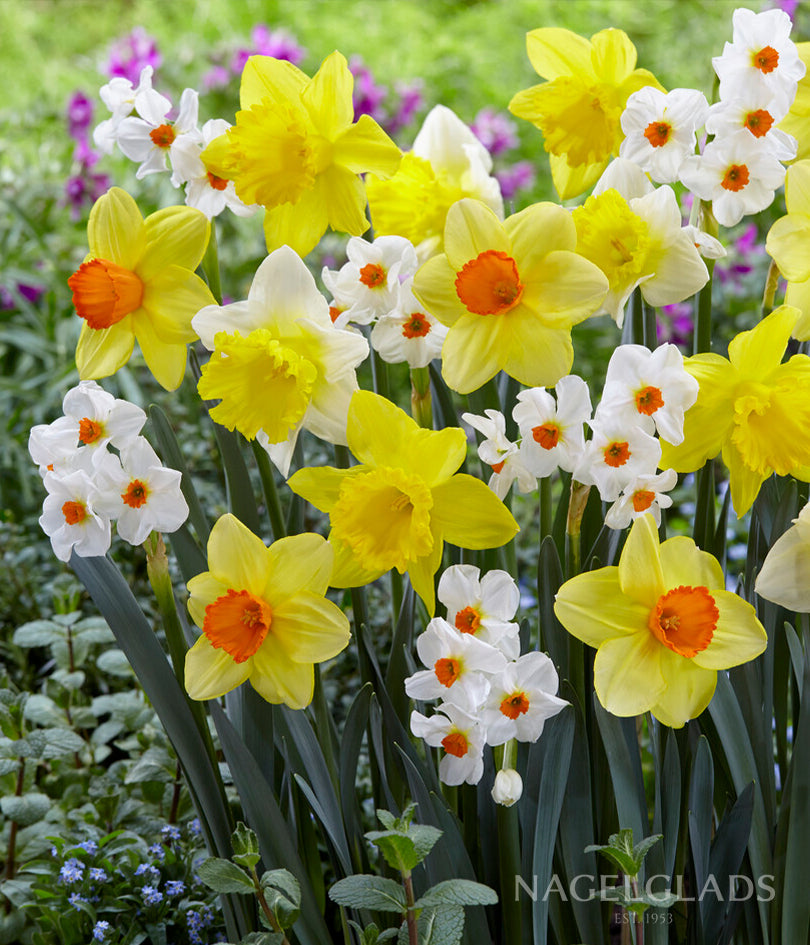
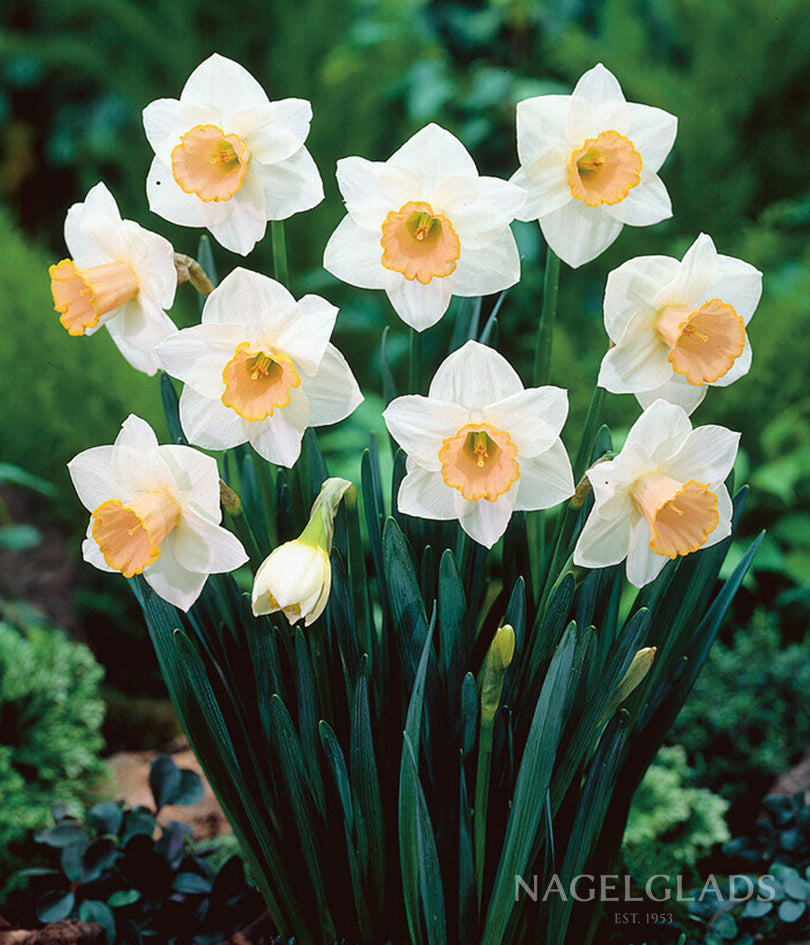
- For softer harmony, try Apricot Foxx Triumph Tulips alongside Salome Daffodils for peach and apricot warmth.
- Looking ahead to summer, Sugar Babe Gladiolus (soft peach-pink) with Apricot Bubble Gum Gladiolus continues that same warm analogous palette in later months.
- For a stronger fiery band, Velvet Raspberry Gladiolus, Ocaso Gladiolus, and Dador de Pan Gladiolus create a ribbon of reds and oranges that echoes the glowing effect of spring’s tulip-and-daffodil blends.
Triadic Combinations: Balanced Energy
A triadic scheme uses three colors evenly spaced on the wheel, balancing boldness with harmony.
- Banja Luka Darwin Tulips (red and gold), Negrita Double Tulips, and Azureum Allium together create a balanced trio of warm, cool, and vivid mid-spring tones.
- For a pastel triad, try Pretty Princess Tulips, Mount Hood Daffodils, and Crystal Star Fringed Tulips for an airy composition.
- For summer, Blue Tropic Gladiolus (cool purple-blue), Bra Val Gladiolus (vivid yellow), and Strawberry Swirl Gladiolus (pink blend) deliver a lively triadic arrangement that feels as playful as the spring palettes.
- Another triad: Coral Crush Gladiolus, Purple Art Gladiolus, and Kio Gladiolus. The coral, violet, and green combination creates a bold but balanced scheme for large summer borders.
Layering for Succession and Depth

Color design is not just about hue, but also about timing and vertical layering. Planting bulbs of different heights ensures that colors interact both horizontally and vertically in the bed.
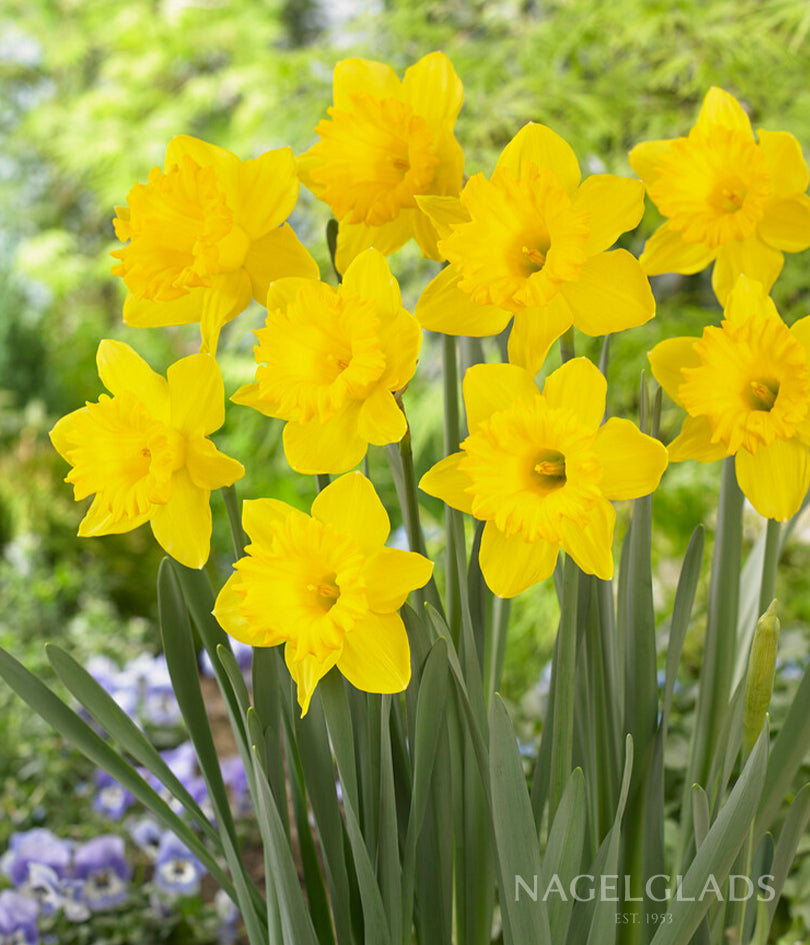
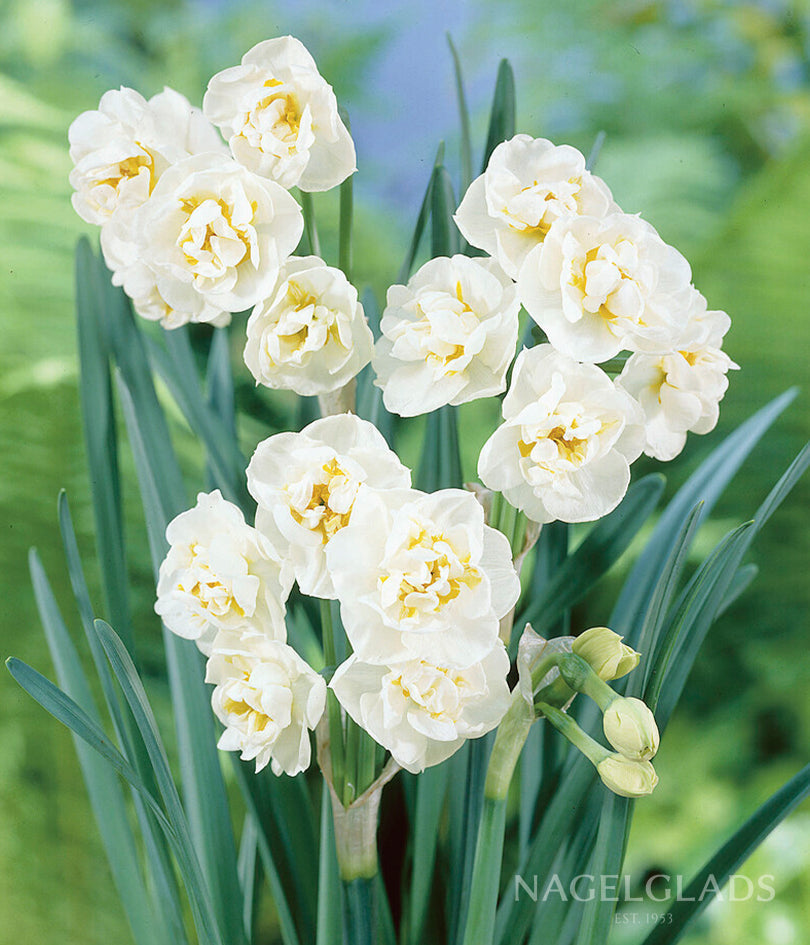
- Use Multibulbosum Allium for tall architectural accents above a base of Don Quichotte Triumph Tulips and Mixed Daffodils.
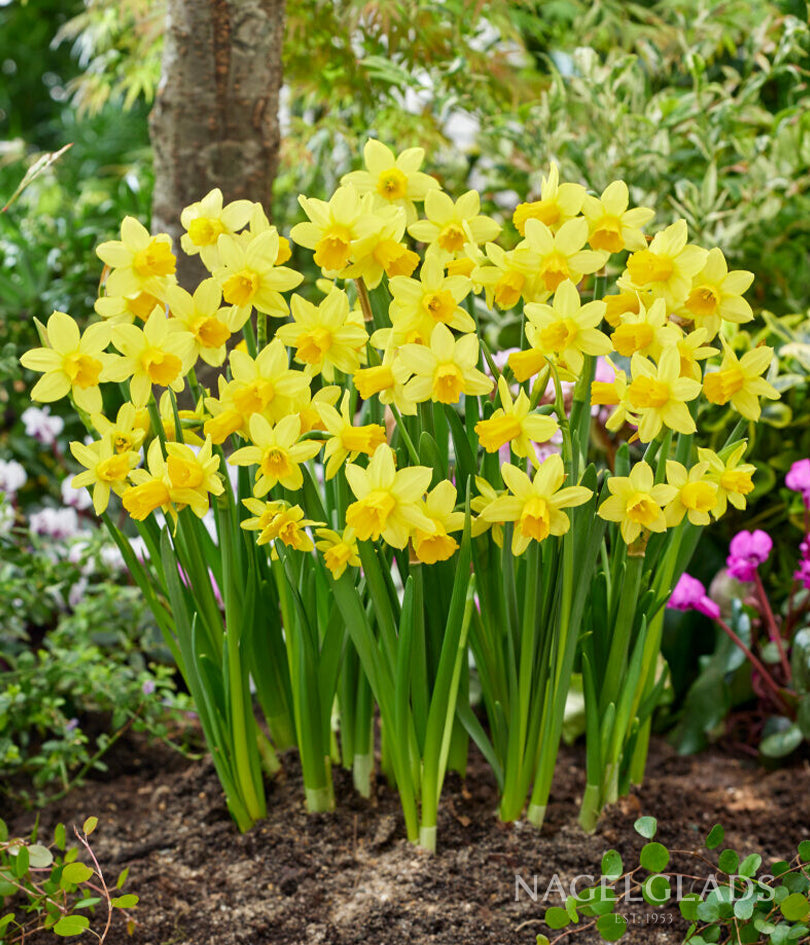
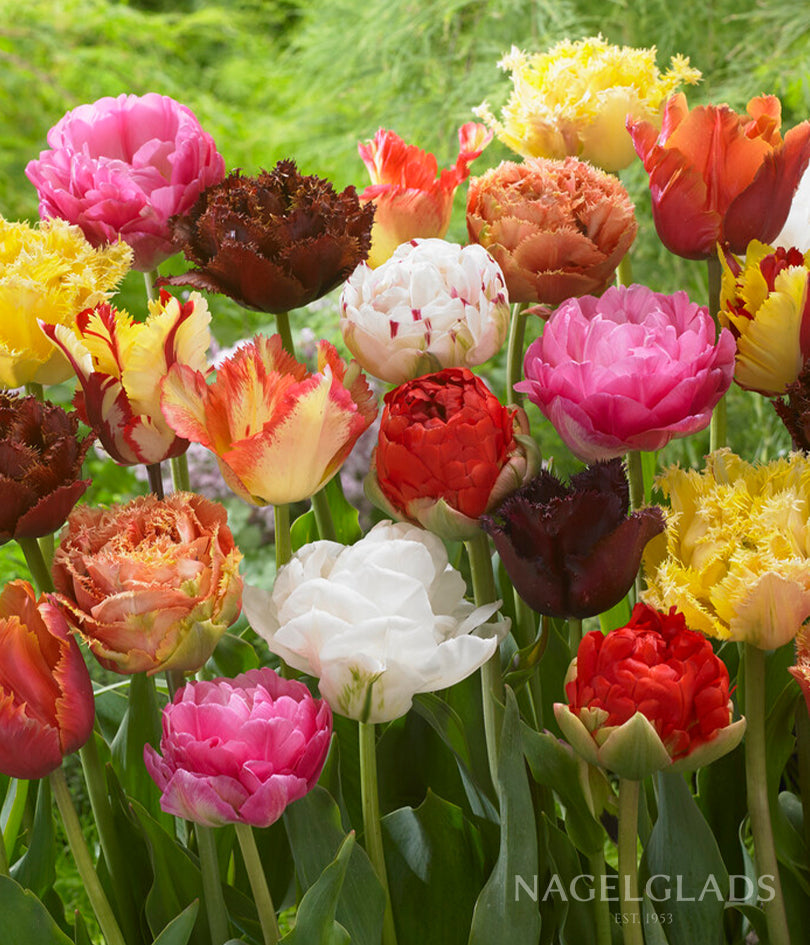
- Edge pathways with low-growing Tete a Tete Daffodils while letting taller tulip mixes like Prince Tulip Mix form a vibrant middle layer.
- For summer, Titanic Gladiolus makes a commanding vertical accent above shorter companions like Black Sea Gladiolus or Amber Mistique Gladiolus, layering height as well as color.
- Plant Peche Melba Gladiolus in rows behind Zamora Gladiolus to create a cascading wave of pink-red to orange, mirroring the layered rhythm you’d design with Tulips and Daffodils in spring.
Designing with Mood in Mind
- Bold and Dynamic: Pair complementary colors like yellow Daffodils with purple Tulips, or extend into summer with purple and gold Gladiolus.
- Calm and Unified: Stick to analogous groupings such as apricot Tulips and Daffodils, or peach and raspberry Gladiolus.
- Playful and Balanced: Use triadic groupings for lively spring beds and repeat the principle with Gladiolus for late-summer drama.
By planting with color theory in mind, bulk landscapes become more than flower beds—they transform into orchestrated compositions. Whether you are planting Tulips for farm sales, Daffodils for naturalizing, Alliums for architectural interest, or pre-ordering Gladiolus for next summer, using design principles ensures your garden has impact and intentional beauty across the seasons.
| Complementary (High Contrast) | Analogous (Harmonious Flow) | Triadic (Balanced Energy) |
|---|---|---|
| Negrita Triumph Tulip + Carlton Daffodil | Apricot Foxx Triumph Tulip + Salome Daffodil | Banja Luka Darwin Tulip + Negrita Double Tulip + Azureum Allium |
| Purple Sensation Allium + Strong Gold Triumph Tulip | Orange van Eijk Darwin Tulip + Goblet Daffodil | Pretty Princess Tulip + Mount Hood Daffodil + Crystal Star Fringed Tulip |
| Purple Magic Gladiolus + Olympic Flame Gladiolus | Sugar Babe Gladiolus + Apricot Bubble Gum Gladiolus | Blue Tropic Gladiolus + Bra Val Gladiolus + Strawberry Swirl Gladiolus |